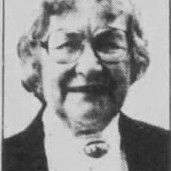
Tape 2 of 16–Jennie Danielski and others [Mrs. Muriel Thorn, Carl Krogh, Louise Perrin, James Cleary]
6-25-1992
Edited by Jeanne Sojka 03/16/2026; Pam Hodgkins 8/6/2025
Jim : Well, one day we, two of us, started out. We were about 13 years of age with a horse and a buggy and some ropes. And he had some livestock over on Hawks Road.
There was a pasture there on the left side. And there was a corral there where we first had to shoe the cattle into the corral. And then, they were not milking cows.
We started home with a horse and buggy. And one of us was walking. We were going to take turns driving and walking.
And we got to this spot on Hawks Road where there was a swamp on both sides. And there was a sort of a culvert connected the two together. And one of these ornery creatures decided to take off into the swamp.
And immediately, she started sinking. It was like quicksand. The boy with me was really smarter than I was.
There were quite a few dead trees there, such as you’ll find in many swamps. And he picked up part of a dead tree. I guess it was about a six inch diameter or so.
And he shoved it under the critter’s belly to help support her. And I got a rope from the wagon that we had and backed the horse off a little bit because the rest of us had passed by this danger spot. And we literally snaked that critter out of the swamp.
And she was all covered with mud and everything else. It was an uneventful trip the rest of the way home. And we were so afraid that Deacon Greenough wouldn’t like the idea.
And we weren’t sure whether the young heifer was in good condition or not. But we took her out and washed her off carefully first out by the watering trough before we put her back in the stall in the barn where she belonged. And we never said a word to Deacon Greenough about it.
But I have oftentimes thought, I don’t know if you could find two 13-year-old boys today that could hitch up a horse and wagon and have their ropes and the fortitude and the daring to do this job. And I don’t know if you’d find another farmer in Deerfield who would trust a couple of kids to do that job. But I always enjoy working for old Deacon Greenough.
It was a good education because you learned all parts of farming really. One horse jobs, two horse jobs, haying, horseradish, picking apples. He raised strawberries at one time.
And he used to sit up on his front porch sometimes with the magnifying, not magnifying glasses, but opera glasses. We’d get home some nights and he’d tell us, he says, you boys didn’t rake up very clean after that load that you picked up down now where where there’s a store that sells all kinds of plants and fruit produce. That was part of J.J.’s property too.
Well, I’ve talked too much already. Let somebody else talk. Very interesting.
Jennie: And his brother in West, it must have been West Deerfield, had a house and I don’t know if it’s still there or not.
Jim: That was his wife’s sister. That was Herbert Andrews and his wife Lizzie.
That house is still there? Yeah. Oh, it is there. And that was the Deacon’s wife’s sister was Mrs. Andrews.
That was my great-aunt. And they watched each other with those glasses.
You know, they’re supposed to have signals back and forth.
Jennie: And we, for the young people, you know, it was interesting to think that they had found such a way to be in communication and see each other.
Jim: Do we know you have a brother who was associated with the college in Westfield, Massachusetts?
Carl: Brother James, who was a president of Mass Aggie at one time and president of Westfield State Teacher’s College.
Jim: I met him.
Jim: I worked in Westfield for a jeweler for a few years and I went up to see him and had a nice conversation with him. But I knew that he held an office, whether he was president or what it was.
Carl: What are some of your other girlhood memories? What did girls used to do together?
Jennie: Well, you know, when you lived on a farm, you weren’t a great many of them together.
But as we got into school here from the Wapping School, where I went for the first grade, there were many more opportunities. And the ones that I was telling Mr. Cleary about are the girls that were the Hunt girls who lived near where he was living at that time and his mother and father. And one was in my class, one was in my sister’s class, and I don’t know what else, where the others, because there were three girls and a boy.
Jim: : Where did they live, Jenny?
Jennie: Well, they lived Pleasant Avenue. Is that what it is? It’s Wapping Road, we used to call it, I think.
Jim: It’s on the way up the hill where Mary Coleman’s lives, halfway up Pleasant Avenue.
Jim: It used to be called Pigville Hill. Yeah. And Dr. Greenough didn’t like the name, so she petitioned and was able to change the name from Pigville to Pleasant Avenue.
Jennie: Oh nice, what a contrast.
Louise: I never knew how it got the name Pleasant Avenue until today.
Jim: You and I had a trip there just before we came here.
Jennie: And also, of course, when we got to the [Deerfield] Academy, then there were many more opportunities. We had three women who were our teachers and, I don’t know, like almost like chaperones maybe. And we played ball, softball.
I wasn’t very good, but I played too. And we went on walks and picked wildflowers and things of that kind. And then the bus would come and take us home.
It wouldn’t be a bus, it’d be a horse and sort of a low wagon. And we sat just any old way you could, didn’t make any difference. And in those days, you see, this [Route] 5 and 10 was not yet built.
So you went around into that circle, at Wapping Road, I think we called it. And then under an underpass and up the hill too by the, well, yes, the Arms House and those places.
Jim: Did you live near the Melnik Farm?
Jennie: When we were there, there was our farm and the Childs’, he worked for the Childs’, he was a Childs’, and he worked for the big farm, the Childs’ farm.
And there was a little house next to his, so there were those three houses and the Melnik House. And across the road, there was another house that I don’t quite know who those people were, we never really knew. But, because that house changed its occupants quite frequently.
And there was a mill right opposite us, and that was great fun.
Jim: I remember the mill.
Jennie: Oh, yes.
Jim: I used to drive apples, our apples, over in an empty barrel and come back with a full barrel of cider. We always questioned if we got the cider that was pressed from our own apples because it seemed like they started filling your barrel and then it took out there.
Jennie: You were suspicious.
Carl: That’s where it gets the name Mill and Bars, is it?
Jennie: Yes, and they spelled it, see it is Mill and Bars, but they spelled it Mill and Bars on our address, M-I-L-L-E-N-B-A-R-S, I think it was. And there weren’t very, now, you know, it’s so, has so many houses that it doesn’t look like it did at all.
Jim: When my mother’s father and mother, perhaps not when they first came to Deerfield, but they did live right in that area, a big white house.
Jennie: We have… Well, that must have been the house we lived in then, the Star House.
Jim: They had 10 children, the Cadigan family. There were six girls and four boys.
Jennie: Wow.
Jim: And my mother went to the little schoolhouse in Wapping.
Yes.
Jim: And there was a lane in South Deerfield, my grandfather used to have horse and wagons, that sort of thing. There’s a, right near the railroad station in South Deerfield, it’s called Cadigan Lane. And Mr. Melnik from West Deerfield, who does a lot of research of families and so forth, had a story on that that he told us.
Carl: How many grades were in the Wapping school? Do you remember?
Jim: I didn’t go to school there, I don’t know.
Jennie: I can’t remember. I know that I went the first grade and then they closed it.
See, that school would be, maybe one year would be on, another year would not have been. I don’t know. Oh, hello Louise.
Jim: Have you seen that booklet that the school bell rings again?
Jennie: No. The new one they got? Well, I think Historical Society of Deerfield.
Carl: I see it, I haven’t read it yet.
Jim: Oh, this has been put out for quite a long time. I have a copy of it, I didn’t bring it with me, but it tells all, it answers some of those questions about how many rooms were in the school. I had one cousin, Mary Mannix Eddy, who was a school teacher there.
Jennie: Oh, really?
Jim: And as I said, my mother went to school there. I sort of resented the fact that they moved away from Wapping and put it up at the north end of Old Deerfield Street.
Jennie: I don’t think Hawks wanted that there anymore.
Carl: The Hawks family was quite interested and helpful in moving the school.
Jennie: It came to Deerfield and has its little place there very nicely, I think.
Carl: What were the old Deerfield stories that you heard growing up as a child?
Jennie: Well, of course, Indians, although they were long gone, were still very important when I was growing up.
Jennie: Our games were all based on Indians. You know, you’d get a little stick and pretend it was something, or you’d have a string on it, and it was, so we played all kinds of games, and they were just as though the Indians were still around. It seemed strange when I think of it now.
Carl: Talk more about that. Tell me more about the games.
Jennie: Well, of course, you know, they were made up as you went, so they were very ad-lib, I guess you’d call it.
And we hid around the houses and trees and wherever that we could, and it was very open. Then you could run anywhere you wished, and nobody ever said anything, unless there were crops were in. Then somebody would be kind of fussy about it.
Carl: Where did you get this notion about the Indians?
Jennie: I don’t know, must have been that someone already, I mean, just something that was still going on, and we were, but that was our big thing, were the Indians. And we had, you know, even in guiding now, a talk about the fact that the Indians, when they were coming from Pine Hill, you know Pine Hill in the Meadows, North Meadows, where they had stayed the night of, before the massacre, and then when it was the proper time, according to them, to rush into Deerfield, they started coming across, but they were very careful that they would not be seen or heard, so that they, and we used to play this, they would run and stop, and run and stop, so it would sound like wind, supposedly. Did you hear that story? And they came into Deerfield, they didn’t have any difficulty in coming in the first place, Deerfield didn’t know they were coming, you know, the snow was very high that winter, and they were so safe from everybody that they thought the Indians wouldn’t get to them either, but they were fooled.
Jim: I understand the sentry was asleep.
Jim Well, that’s what they say, that the sentry didn’t have to be on the alert, but someone had left one of the gates open too, so some people say, and they could come through, but anyway, the snow was piled so high from the north side, you know, it would stop, so it just kept piling and piling, and finally you just had where you would run up and drop in, so the many things of that kind, and that was something we played too, to whatever we came to mind, I guess.
Carl: Where did, as children, where did you hear about the stopping and starting to sound like the wind?
Jennie: Well, somebody would tell us, and Mrs. Fuller used to tell us nice stories.
Carl: Who was she?
Louise or Mrs. Thorn: My grandmother, Mary. Mary Williams Fuller.
Jennie: Tell us some of the stories that she told.
Jennie: Well, she did a lot of things that were, but you know, in growing up, you don’t, you just assimilate all this, and don’t think too much about it or anything, and the, but she was very nice. She would stop by and see us as she was going up, and a lot of walking was done in those days, so you had time to stop, and you had time to sit down for a minute, and things like that.
Carl: Do you remember the pageants that Mrs. Eager put on? She put on two of them.
Carl: In Old Deerfield.
Jim: In Old Deerfield. I had two roles in one of them.
Jim: I was a student in Hannah Beaman’s school, and I remember one of the songs had to do with the chicks are coming, chickens are coming, and so forth, and the other, I was painted up as an Indian, and they had two pageants. They were held up in back of, oh, probably about where Bement School was located in the field, back there, toward what is now Route 5 and 10. It was one of those things, I remember there was a brook went down through there, and I think they flooded the brook so as to have some canoes pass up through there.
You remember this?
?Louise or Mrs. Thorn: I remember hearing about it, and I have seen pictures. My mother had a part, she had a wreath of grapes around her head, and a long filmy white costume, and she was the spirit of something or other, and I’m not quite sure what it was.
Jim: A lot of people participated in those, because the two different pageants, there was quite a lot of fighting in one, I know shooting in all, and I think it was the early pageant that I borrowed my old, my dad’s old double barrel hammered shotgun, and we got blank cartridges somewhere for use in the thing.
Jim: But it was quite exciting for me at that time, I was quite young.
Carl: So you were actually painted up, you were painted up as an Indian, were you?
Jim: Yes.
Carl: Tell me everything you can remember about the pageant.
Jim: Well, I think I’ve told you most everything I can remember, excepting that there was this Hannah Beaman school, and we had some singing together as a group, and of course the Indians approached, and then there was this, as she was describing there, a reenactment of the Indian assault on old Deerfield, and of course in one of the pageants, at least, there was quite a bit of fighting back and forth, where they were using blank cartridges and guns and so forth, and then there was this scene where the boat canoes came down the brook, down in the middle of the field. Beyond that, I can’t elaborate very much.
Carl: But you yourself played the part of an Indian?
Jim: I played the part of an Indian in one of them.
Jim: I had an Indian costume and was painted up as an Indian, yes.
Carl: How did you feel?
Jim: How did I feel? Well, I felt pretty elated both times, because it was exciting for a young man to take part in production of that kind. Elsa Eager was the name of one of the daughters, I think, of the older, I believe it was her mother, who was the chief producer of the pageant.
Carl: And how were the Indians portrayed in this pageant?
Jim: Well, I guess they were portrayed as bad Indians.
Carl: What did you do in your part?
Jim: Well, I can remember we did a lot of running and crouching and that sort of thing. And I recall, actually, between the two pageants, I recall better the part that I played as a student in Hannah Beeman’s school as a white boy.
And I remembered at that time that I used to comb my hair pompadour up straight. And I think it was Mrs. Eager or someone said to me, please comb your hair down. I guess that boys didn’t comb their hair up pompadour in those days.
Carl: What do you remember, Mrs. [Louise] Perrin, about the old Deerfield stories? What was your consciousness as a child of Deerfield? Did you run and play Indian in the woods too?
Louise: No, because I wasn’t living here then. I was up in Vermont.
Carl: That’s right.
You were in Vermont. Well, what about the history of your own place you grew up? Did you have a sense of it as a child?
Louise: Because I was in Vermont and New Hampshire. But I mean, where you grew up.
That’s where I grew up.
Carl: Did you have a sense of the history of that place too?
Louise: No.
Carl: It’s interesting that this found its way into your games, as you said.
Mrs. Thorn (?): Well, you know, it’s interesting because one of the things that I remember, Elizabeth had in the house a headdress. It was made out of canvas and it had a place to stick feathers in all the way around. And a tomahawk.
And this was something they had made to play with. You know, it was a wooden tomahawk. And that was very carefully preserved.
It’s now in Memorial Hall. But I’ve forgotten. I think Elizabeth probably helped make it.
Maybe Elizabeth and Alfred. But she had a friend.
Hi.
Hello. Who, um, come sit down. She had a friend, Geraldine Lee, who used to come to visit on the trolley.
Geraldine lived in Northampton. And one time, I think it was George, hid along the way and scared the pants off her. Jumped out, you know, playing Indian kind of thing.
And she never quite forgave him for that. And I think he may have been wearing this, you know.
Jennie: Looked like an Indian.
Mrs. Thorn: So that idea of playing Indian was very true. And whether it was my grandmother that instigated that kind of play by talking to you.
She probably did.
Jennie: I don’t know how else we. But it was just natural for us somehow. That was, well, our games were based on that.
Mrs. Thorn: So apparently theirs were too.
Jim: Yes. I hate to interrupt anything, but do I know either of these two ladies? And George Drask, a classmate, was another summer worker.
My dad was the foreman. And we operated between Turners Falls and South Deerfield.
(? ): I don’t think Frank ever did.
Jim: And one of the Russo boys, Ted Russo, was a member of that Gandhi dance, as they used to call the repair crew on the old New Haven Railroad at that time. I have a catalog, a New Haven Hartford catalog here that shows old Deerfield and Turners Falls. And I was looking for a timetable, which I owned, but couldn’t find.
You could take a train in Turners Falls or Deerfield or from Conway or Williamsburg and go all the way down through Simsbury, Connecticut to Hartford. And then from there, of course, you could wind your way to New York City, if you cared to.
Mrs. Thorn: Can’t do it now.
No, passenger train business is not very good right now. While I’m talking, I don’t want to lose my 1915 graduation folder. Did it get to… Oh, here it is, right here.
In the shelf of somewhere. I’d like that back.
Jennie: Sort of special.
I don’t remember having a graduation card like that. Now, what year did you graduate?
Jennie: Well, from here, this is from this school, from the Academy in 1925. And I went, of course, four years, so I must have made it 21.
Jennie: 1921. But another thing, the Cowles Farm reminds me of something that happened in my husband’s family. When he came here, when he first came from Poland, a lot of the people went to work, the men, for the Cowles Farm, which was one of the big farms.
And he could remember how when Russell Cowles would come, and he had a big car, and he would come and watch the men work in the fields and read his newspaper.
Jim: Pardon me, I didn’t hear that. Who would do the…
Jennie: Russell, you know, Russell Cowles.
Jim: Oh, Russell would watch them work. Yes, he would watch them work. He didn’t help them? No, the boys didn’t think much of that.
Jennie: No, they didn’t. They didn’t like it. But nevertheless, that was done.
Jennie: And like my father-in-law, my husband’s father, when he first came to this country, he worked for him too, because that was one of the natural things to do, apparently. They were very pleased to be in agriculture anyway, because they came from an agricultural country. And he didn’t work too long until the corn season came.
And they had many little gripes, and maybe big ones, I don’t know. But what finished him at that farm was that one day they had sweet corn, and they had these big dishes of sweet corn, and that was the supper. And he looked at that, and he said, he worked like a horse, but he wouldn’t eat like a horse.
And he just picked himself up, didn’t even finish his supper, he didn’t want it, and walked to Greenfield, where he started somewhere else, I don’t know where. But in our family, we’ve always had a lot of fun with that, you know, I think that he did that.
Jim: Do you ever hear the story that Winthrop Arms and Warren Childs, who used to live across from the Memorial Hall, were in Greenfield quite late one night, and they missed the last trolley car going south to Northampton, and they walked as far as Electric Car Barns on Deerfield Street, and appropriated a trolley car that was on the rails there, and drove it, and Warren got off at his stop near the watering trough in the center of Old Deerfield, because he lived on Memorial Street, and Winthrop drove it in front of his house and parked it there.
And went in and went to bed, I suppose. Anyway, the trolley company sent a rescue car after it, and investigation revealed who had taken the trolley car. And I believe it was old Attorney Ball, Sr., who heard the case in court, and he only slapped their wrist.
He said, very evidently, they were not attempting to steal it. They just wanted to borrow a ride. And that’s about as much as you… Can you add anything to that?
Mrs. Thorn: No, no, I had forgotten.
Did you ever hear the story? I heard it, but I had forgotten all about it.
Louise: Mary Hawks might be able to tell you some things about that, too.
Yeah.
Louise: Because her father, I guess, was involved in it, with those singing men.
Jim: The thing I remember about Russell Cowle’s farm, also, it was on a Saturday, and Deerfield Academy was having a make-up baseball game with Orange. And a lot of the players on the team were farmers’ sons, up and down the valley, and Mr. Boyden had quite a time trying to round up nine players to go to Orange.
He had been down to my house, and my mother told him that I was working for Russell Cowle’s that Saturday. So we stopped off at the Cowle’s residence, and pinpointed the field where the men were working, and the boys. And Mr. Boyden drove up with his horse and buggy, which was quite a familiar sight in old Deerfield in those days.
Jim: And, of course, we run and jump when we saw Mr. Boyden stop, of course. And he said to me, Jimmy, he says, how would you like to go to Orange to play a ball game this afternoon? I said, don’t ask me twice, my back is aching. And so we did.
We went to Orange, and there was a pitcher by the name of “Dud” Davis, who owned the Davis Linoleum shop in Greenfield later, and I think he was a left-handed pitcher. And they beat us, but I remember that I made one of the runs, because I got hit by the ball, and about the time that I started sneaking around the bases, somebody made a wild pitch and so forth, and I was able to score one of the runs, even though I didn’t even bat the ball.
Jennie: One of the big stories, and that’s even included in any of the books that are written on Deerfield Academy, that he would go riding through the fields and speak to the boys and to their fathers to be sure that they could come to Deerfield Academy.
So that he recruited his students that way. That goes along with what you’re saying.
Carl: Can you tell us more about the experience of Polish people in the valley here?
Jim: Well, for us, the Polish people really did go to the South Deerfield and Sunderland, and they were earlier than my father, and they had big farms, whereas my father came here to Deerfield.
Jim: It was closer to Greenfield, I guess, and he bought the farm, the Star Farm, which was quite important, I guess, the family for some time, but it had not had anyone living in it for, you know, in the house, and the farm was not run, and it was apparently sort of needed a lot of help, and he bought that farm. And I can remember, I was only a very little girl, and I had a sister, and she rode in the little stroller, whatever it was, and I had to walk from where the trolley car was in Wapping to where the farm was, and I don’t believe my mother even knew exactly where it was, but she got there, I guess. So there she was with her two little children.
Jim: Later, we discovered, or she did, that there was a cross path from, not from our farm, but that Child’s farm right next to it. It wasn’t a farm, really. It was just a place where they lived, and you could skip that walk around, which made, you know, the triangle, which made it much shorter, and that was the way we went to school.
Jim: That’s the way we always would go when we were going to go to the trolley car or anywhere, and that was a big thing. When the corn grew, you really were going through like a wilderness, couldn’t see anything, you just had to feel your way, and you followed the path. There were watermelons along, and very tempting, that they were thought were safe because they were among the corn.
Jim: Not going to say just exactly what happened to them, but something did, because somebody told us, however, that if the watermelon had a little triangular cut in it, that you better not touch that one, because it might have something put in it to get you. So we had to look for one that didn’t have that, which weren’t very many.
Whose watermelons?
I don’t know who that would have been, but there was a Child’s, not the big Child’s farm, but another Child’s.
There were a lot of Child’s right across the road.
Carl: Was that Allen Child’s?
Jennie: Allen Child’s, yeah, I couldn’t remember, and I think it was their land.
There were 11 different Child’s lots up in the cemetery, so there were lots of Child’s.
Jim: Allen Child’s, Harry Child’s, Allen Child’s, Sam Child’s. Sam Child’s lived there when I was growing up.
Now is that the same family?
They’re the same family.
So then Allen was probably his father. I don’t know.
Jennie: There must have been a relationship, but I don’t know what it was.
Jennie: But anyway, we always, I don’t know whether I should say this, but we thought that their farm wasn’t very good because they didn’t like to work too much. That was a story.
Carl: Could we hear from you for a while? You brought a packet of stuff.
Unknown New person speaking: Well, I just have some data on my grandfather, Deacon Greenough. I was just in case something came up. We had to check some dates or anything.
I thought I’d have it along, but Jim knows all the lore on Deacon Greenough. He worked for him. He was a local farmer, very entrepreneurial.
He claims that he was the first one who successfully shipped cream to Boston. And he did it by putting a smaller milk can inside of a bigger milk can so it was insulated. And he could get the cream to Boston that was still fresh.
Unknown New Person: He also started a pickle and horseradish business in the 1870s, which he kept up until the 1920s. Well, he was in his 80s. And this was fairly successful.
I mean, he had his ups and downs. He wasn’t very good at collecting bills. But when he did get paid, he was doing quite well.
And he was a local character, 50 years a deacon in the local church.
Jim: He was one of the first men to use commercially jingles.
Oh, yes.
Both men speaking: There was a man who fell in love or something. That was his business.
If a boy likes a girl, that’s his business.
And if a girl likes a boy, that’s her business. But if they both like horseradish, that’s my business.
Jim: I learned an awful lot from old Deacon Greenough.
And then I got an early education. He used to have a waiting station down near the electric car line. Did you hear about that, Carl? And reading that graffiti in that waiting station was an education in itself.
We used to drop in there sometimes just to keep up with what was going on in the world. And he made pickles. He had a sidetrack on the Boston Main Railroad into his pickle shop.
And he shipped them all over the Northeast. He used a cane all the time. And he had a little spike on the end of the cane.
And he used that for multiple purposes. If he saw some papers blowing around out in the yard there, he’d spare them and rescue them. And when we were mixing the vinegar and the salt in his brine, he would come over with the same cane.
He’d stir it in the barrel and put it up to his lips and taste it. And he’d say, put a little more salt in that, boys. But it was really a pleasure working for him.
And he paid me 10 cents a woodchuck tail for proof that I had caught some woodchucks that were devouring some of his crops or whatever. And someone told me the story that Deacon Greenough would not raise tobacco because he believed it was unhealthful. And on his horseradish, he used to advertise, it’s good for frivolity.
Sure cure for frivolity.
Sure cure for frivolity. I’m sure, Carl, if you’d loosen up, you could tell a lot more about old Deacon Greenough.
Carl: See, I remember so little about him because I was very young. But I knew he was a character.
Jim: My mother came up to Deacon Greenough’s farm one day. And we kids loved it. It was a good test of your strength and agility and so forth. And this particular day, some of his machinery was not the most modern and even a little decrepit sometimes.
Jim: But we were using a saw with a big powerful motor. And the table, as you call it, where you’d put the wood on it and push it into the saw was a little bit rickety. And we were cutting up old apple tree limbs and railroad ties that were there when my mother approached.
Jim: And she brought some lunch up to us, another boy and myself. This other boy was a state ward boy at my house, a fellow by the name of John Hurley. And he’s the same boy that helped me rescue the cattle over on Hawks Road.
Jim: And when my mother saw this, she was scared stiff. And every once in a while, a small stick would get caught in the saw and it would go up over your head, you know. And my mother said, I’m going to tell Deacon Greenough to take you boys off this job.
But it’s too dangerous for young boys to be sawing wood with a terrifically big blade. It must have been a 30 or 36 inch big blade. And we begged him.
We says, don’t, Ma, don’t speak to him about this. This is the best job we’ve had all day. Better than weeding horseradish and onions.
And he was kind of clever. He would come up to the field where we were weeding. And of course, we were fresh start in the morning, you know, and full of vim and vigor.
And he would time us to make one round trip on the row, up and back. And then he would take a stick and he would walk over. And so many rows.
He says, you’ll be here, ought to be here by noontime, boys. And he’d push the stick in. Be a lot of effort we were supposed to put in between morning and noontime.
And Dr. Greenough’s daughter, Clara Greenough, brought me into the world at my old home on Wapping Road in Deerfield. She was later one of the school doctors in Greenfield. And I guess she practiced, had a general practice besides that.
Carl: 17, I mean, 1899, she started practicing and practiced until the First World War. And but she was the school doctor up in Greenfield.
Jennie: She was interesting in our family because my husband also came into the world with Dr. Clara Greenough.
And he was very proud of that. And what happened is that my husband’s father had a pact with Dr. Greenough that if it was a girl, it would only be five dollars. But if it was a boy, he needed a boy because he had two girls, it would be ten dollars.
And he said he’d pay it gladly. And he did. So that was the story.
But we all grew up with the image of her and also what she somehow, what it meant to be, have something to do with her. And I don’t know why, but that was it. We used to go pick blueberries and around their property up on the hill there.
Jim: So we used to pick blueberries at Greenough’s pasture.
That’s it.
And he would set up a little stand on the road not far from the pasture gates.
And I’m not sure who used this system. There was a Herron, Herrons up in the Colrain area or somewhere that also had blueberry pastures. One of them used to take, oh, like a nickel a quart, measure our berries that we picked.
And the other used to take a portion of our berries as payment for picking berries. And I can remember the big anthills that used to be up there in Greenough’s pasture. Of course, that all grew up into almost woods, I’m sure.
Jim: And a few houses were built down the road that didn’t exist years ago, too.
Jennie: That was the way that you picked berries. We would come with pails, all my brothers and my sister, and spend most of the day there.
We’d have a sandwich or something and ate berries. And then went through this little contraption. We had no money, so they took the berries.
That was our payment. But it’d be a lot of fun to bring back the pails of berries. My mother would insist that we didn’t have any green ones or white ones in it.
But it was a place to meet the young people, too, because everybody, that’s one of the summer things to do, to have berries to pick.
Carl: What about courting? Did people court a little bit when they were picking berries?
Jennie: Well, I can’t remember exactly. We still were against the boys, as I can remember.
You know, the boys had their little place, and even my brothers would leave us and pick with the boys, and we would pick with the girls.
Carl: When did that start to change for you?
Jennie: Well, it must have changed. I can’t imagine it not.
But, well, you know, as we got older, we had to work on the farm. Berries were sort of an extra thing that you could do. So maybe we lost that chain or something of connection.
But although we played games, running games and hiding games, hiding was a very good game to play because there were places where you could hide and all that. But we had, the Academy had dances for us. And I was trying to think the other day when I was telling someone, it must have been every month.
I don’t think that you could have had one every week, but maybe we did. And we would go, and Mr. Boyden and Mrs. Boyden would be there, and they would be watching us and helping the youngsters to dance and everything like that. We sang songs, had a parade around the hall, and that was about it, I guess.
And then, of course, Mr. Boyden was very certain that everybody went in their proper way to go home. So that was very nice, too. One thing I remember about some of the receptions that Mr. Boyden used to put on.
You know, I can’t remember that. I think he had an older person, not a grown up. I met with some of them, though.
Oh, yes. That is his, that would be the dances that were when I was going to school. But this was even before.
Jim: Mr. Boyden insisted that we not sit around and be wallflowers. He would make us ask some other girl, some girl that might be sitting unattended, to ask her to dance. And I played the fiddle in an orchestra there while I was going to school.
I never got to be a very good dancer, really. But I can remember the Davis girls in South Deerfield were pianists, and Inez went to Deerfield. She was a redheaded girl.
And Jimmy Bixler, whose father, I think, was head of some school up north, a, or a college, he was a violinist that we played there. Sometimes I’d swap over and play the drums. I remember Mr. Boyden cautioned me one time I was playing the drums too loud.
Jim: But it was a lot of fun. Saturdays, sometimes we would go up and practice basketball in the basketball hall, which was the second floor of the old school. And it was an old southern pine floor.
And one Saturday, I slipped and fell and slid on my buttocks and felt a little stinging sensation. [long pause] And I went to Dr. Thorn’s house. And he wasn’t in at the moment, but Mrs. Thorn entertained me.
I’d been in that house many times before. I remember there was different floor levels in that old house. And Dr. Thorn made a little slice and took the sliver out, took it out.
And I couldn’t put it into an ordinary mailing envelope. I had to put it into a commercial size envelope. And I saved it for a good many years.
I should have gone in the lumber business.
Carl: Sounds like you were too busy playing the fiddle to get much cordoned on. Is that what happened to you?
Jim: Well, I played the violin, the old Hudson School of Music, which was in the hole opposite the archway near the Boston Main Railroad Station to the west of it, down low.
I didn’t know a man’s name that lived there, Kemp or something like that. But the violin really opened a lot of doors for me. I was over to your mother and Elizabeth’s house many times playing the violin.
Sometimes Winthrop Arms would come. He had a nice voice and he knew all the operas. Paul Hawks would come and sing sometimes.
Sometimes Nick Russo. And sometimes we would go up into the… What is the big square house opposite the academy entrance there? There’s supposed to be a fiddler’s balcony.
Louise: Frary House.
Jim: Frary House. We would play there sometimes.
Jennie: Well, you weren’t in the gallery, though, because they found that later, I guess.
Jim: Well, they had a little fiddler’s gallery. Like a little pulpit or balcony there. I remember that.
And sometimes people would be invited in. We’d show off our skills with a little concert. And I have a viola that Agnes Wynne gave me.
And Philip Wynne used to play the cello. They had a summer house out in back of the Wynne house. We would, in the good weather, we would play out there.
And Susie Hawks was another pianist that… I used to get up there for some musical evenings sometimes. Harold and Kelsey Flower down to South End were musical. We used to stop there quite often for musicals.
And she used to board school teachers there. And, of course, the Fuller House out near The Bars. That was a regular.
I remember one day of walking on a hard crust, cross lots. It saved me about a good half or three quarters of a mile on my walk. I crossed ponds and crossed the meadows.
And I don’t… I perhaps wasn’t as heavy then as I am now. But there was a good substantial crust. When I got over there, Paul Hawks was there with a horse and buggy.
And there were a sleigh or sled or something. And gave me a ride home. But I used to love to go to some of these houses because they had fireplaces.
Jim: And we didn’t have a fireplace in our home. I can remember the Fullers had a fireplace and the Flowers had a fireplace. And to me, that was a very nostalgic setting for a musical evening.
And Winthrop Arms had us up at his house many times. And usually we’d bend an elbow or two there. And on one occasion, I remember when I was living in Springfield and working there.
One hot summer day, I said to one of the police officers on the beat. And I didn’t care that much for beer. But I said to Tommy, just for the… to have a little conversation.
I said, Tommy, I said, “an ice-cool beer wouldn’t taste too bad today, would it?” It was a hot summer day. And he said, “well, no, James. He says, it wouldn’t.”
He says,” I think if you went to that doorway just beyond Ryan’s Drugstore, north of the arch on Main Street. And if they ask you what you want, you tell them that Tommy sent you.” This was during Prohibition.
And he was a police officer. And you went upstairs and there was about a 25-foot bar there. You could order any kind of drink that you wanted.
You had a back stairway. If you got too drunk, they used to go down the back stairway and you’d call a cab for you. And they had about 10 of these one-armed bandits that you played.
I remember one day I played it. And I got the three bars or the three peaches or whatever you’re supposed to get. And it dumped almost $40 in quarters.
[Everyone chatting] Wow, that must…
Jim: And the first thing the bartender said to me, he says, come here, boy. So I went over. And he said, leave those quarters behind.
And he says, “and go back. He says, and be sure and take the hit off the machine. So that the next fellow would be willing to play it.”
Play it, rather. I was working for a jeweler in Springfield at that time. And used to have a violin teacher come up from New York City, Jacob Fracht, F-R-A-C-H-T.
And we played around for some of the organization’s Masonic Lodge. And we played at the jail for some of the prisoners there. And I played in Central High School stage sometimes.
And Nick Russo and Dick Arms and Reuben Slocum sometimes would come down if I had a concert, as did my folks that I was playing at. And of course, I felt like a big shot when I could say to Dick Arms and Nick Russo and Reuben Slocum, “Boys, I want to show you something during Prohibition.” I said, “are you thirsty?” I take them upstairs to this porters and waiters club that the police officer had pointed out to me.
And of course, they thought I was really with it. I’ll give somebody else a chance to talk.
Carl: Does this ring any bells for you?
Jennie or Mrs. Thorn: No, I don’t know about all those things before 1933.
I didn’t come here until 1933. This all went on before. Jennie: The doctors, I remember that Deerfield was really nicely doctored because it was Dr. Thorn, Dr. Davis, and in South Deerfield, it was Dr. Suitor.
So if you didn’t get one doctor, you could try another. And then no doctors now. So that’s the difference.
Unknown Speaker: I never knew Dr. Thorn. Of course, he died during World War I. I can’t remember. Right after World War I.
Jennie: But I remember that we were in school, in this school.
Mrs. Thorn?: Yes.
Jennie: And someone came to call Florence to come home. And then later we heard that her father had died.
Mrs. Thorn ?: Oh, yes. As he was cranking his old Ford.
He had a heart attack.
And he went in the house, sat down in the rocking chair and died.
Jennie: It’s funny because his son later on in Greenfield died to go play tennis. He came out of the porch in the house and just fell.
Fell down the steps.
My brother, who lived not very far from him, went to look after him. But it was too late.
Jim: Mm hmm. Did any of you people ever hear of the Champney artist? There’s a house that Scotty Keith lived in, the last I knew, just north of the old Manning, old Manning house. I helped George Slocum, Reuben’s father, to clean out that place and some others.
And this was a sketchbook that Champney used to use. And I mutilated some of it as a kid. I think I tried to paint in some of it.
I have another one that is even a little better than this. But there’s a couple of his little sketches there.
Jennie: Have you ever presented it to Historic Deerfield? The name was Champney.
You heard of it, Valerie?
Louise: He wrote some books, too. They’re here in this library.
Jim: You have heard of it?
Jennie: Yes.
Jennie: Do you have any of his paintings?
Jim: No, I don’t.
I have some of the Wilby girls’ paintings.
Louise?: Oh, Margaret Wilby. Margaret Willby.
Jim: I think there’s one grotesque one there that I did as a kid.
? : A nice picture of hats.
Mrs. Thorn: I think the Champneys were living in that house when…
Carl: Where Scottie Keith lived.
Mrs. Thorn: When my grandmother was married. And they had their wedding reception there, I believe.
Carl: Tell us about your grandmother.
Unknown Speaker: She was a wonderful… Jenny can tell you more about her than I can.
Jennie: She was the shining light of our bar section.
Jennie: When we saw her coming, everybody, wherever they were, they were called to come together because Mrs. Fuller is here. And she was so nice about so many things and very caring. And anyway, everybody called her Mrs. Deerfield.
She was the lady of the whole thing. No one was as wonderful as she. She was musical.
She could sing. She played the piano. And Elizabeth played the violin.
And Mrs. Fuller got me to come. And she taught me what I know about music, which I always felt was very wonderful. My father had died.
So she was extra sort of caring, I think, for that. But everything, everything hinged on her. But you, you talk.
Unknown Speaker: I don’t know that there’s… She read a great deal and she wrote.
Jennie: She was a librarian.
That’s how I got to read books is because, and my brothers and my sister, and she would help us to pick out the books and bring them home and bring back.
And we were very faithful because we wanted to be sure that she would let us. We didn’t have all those books. And it was very nice.
I got to know them. Another thing she did, which I thought was sort of unusual and special, was to learn words. Every time I came, I had to have some new words I’d never heard before.
And she would have words to exchange. And she would talk about words, how some words are so wonderful and others are just ordinary. They do their little bit, but don’t have the sound or the music of a word.
And mountain was the first word that I ever presented to her. And she made so much of it that to this very day, when I think of it, I think of her and I like the sound of it.
Carl: what did she say about it?
Jennie: Well, she, the way you pronounce it, and do you know that this, I don’t know whether I should take time out for it, but in writing about Abraham Lincoln in this latest book that was written about in New York Times, the man who was writing that book had that sort of thing about words and that you should always write a word and think of how it will sound when you say it.
And that I got that from her a long time ago.
Carl: Mary Williams Field Fuller.
Jennie: The Williams family is very special for history in Deerfield.
And I being a guide had the privilege of talking about them.
Jim: Speaking of music, if I’m not interrupting, I hope, but not only did Dick Arms and Nick Russo and some others go to Springfield if I was playing in a concert, but my mother and father and sister would go down sometimes. And my mother thought it would be nice if I had my accompanist come up from Springfield.
Jim: Her father was a furrier there by the name of Sirkin. She was a Jewish girl. And it was quite a romantic trip for us those days by train.
You turn the seat over in front of you and put your feet up on it, make yourself real comfortable. And we repeated a program in the basement of these at the Tilton Library in South Deerfield. And in Springfield, the program had gone over very, very well.
It was a long aired program. I had a very good teacher from New York who used to come up. And in Springfield, at the conclusion of the program, quite a few young students would come up and they would ask questions.
“How do you get a vibrato?” “And how do you get a staccato?” “And how long have you been playing the violin?” And so forth. And some older people would come up. We had programs and they would ask me to autograph the program.
So we repeated that program in South Deerfield for the South Deerfield Women’s Club. At the conclusion of the program, there was no mad rush up to congratulate us or to complain or anything. But a Mrs. Griffin, an Irish lady from South Deerfield, with a distinct Irish brogue at that time, was the first one to speak to us.
And she said in her Irish brogue, “Now I suppose that was all very nice, but I wish that you had played a tune.” She didn’t go for Mendelssohn and D’Addario (?) and the others. Oh, dear.
Jennie: But Deerfield was a place of, in the summer, there were plays and things put on, I can remember. And in the nice fields, the green grass, the lawns really, just the other side of the inn. Did you ever attend any of those or were those before you?
Unknown Speaker: Yeah, before my time.
Jennie: Before you. And I can remember going at one time when Arthur Ball’s wife, Eleanor Ball, she was, I always thought she was very pretty. She was sort of tall.
She wore these long skirts and all big hats. And she was one of the actresses that had the big part. And we all watched her as she waltzed.
And it was just marvelous. But to us, who very rarely got any of that sort of thing, it was really wonderful. And when it was ever on, we walked through the, you know, by the river and over and came to see the things.
Louise ?: This was not part of the pageants?
Jennie: No, it wasn’t. This was just… I don’t, at least, maybe it was and I didn’t know it. But there’d be quite a few people.
And one time we all came. Everybody was seated and ready. And it rained, so it had to be postponed.
And it took place again.
Carl: Mrs. Thorn, did you get one of these?
Mrs. Thorn: No, no.
Carl: Can you tell us a little bit about the pageants then?
Mrs. Thorn: I don’t remember very much about them.
I just remember who they were. Yeah, I think 1911 may have been the first one. What is this, the pageants? The pageants, yeah.
Jim: I think there were more than two. I think there were four or five.
It might have been, I know of two that I took part in.
But there could have been more.
Jennie: It seemed that if every summer something took place, if it wasn’t a pageant, there was some other kind of big effort.
Mrs. Thorn: I remember hearing that there were dances in this building.
And I don’t remember what… I never… …date that would have been. Now, that may have been earlier.
Jennie: It must have been earlier because I don’t remember.
Mrs Thorn: The town hall was upstairs. Yes, right.
Jim: And there used to be dances.
Mrs. Thorn: Stage updates.
Jim: There were a lot of square dances and so forth upstairs here. You remember that? Yes.
Unknown Speaker: Okay, then that would have been…
Jim: Halls of Victory, down the center, and Ballinger Partner, and all that kind of stuff.
Carl: Were those singing calls?
Were those singing calls? Did the caller sing?
Jim: The caller, I guess he would sing it out. Ballinger Partner, down the center, and all this sort of thing.
Jim: I think there was a man by the name of O’Hara, who used to come down from Greenfield, that called off all the dances. Portland Fancies, I used to like. Halls of Victory, I didn’t star in that.
Carl: And who played the fiddle for those?
Jim: I didn’t know.
I was not what you call a real fiddler. I was supposed to be a long-haired violinist.
Carl: So who was the fiddler?
Jim: Golly, I don’t remember the makeup of the orchestra. They used to have plays upstairs there too, I remember. They had one, a United Nations play.
Louise: They had an organization of the Stockade Players for a while, in the early 40s.
Carl: What was it called?
Louise: The Stockade Players.
Carl: What kind of plays did they do?
Louise: Three-act plays, just a regular thing, as we think of it.
Mrs. Thorn: That was in the 40s and early 50s, wasn’t it? Right. But these dances would have been… Those were earlier. Quite a bit earlier.
Louise: Eleanor Ball, I think, is still in Greenfield, isn’t he? Isn’t she? Do you know Eleanor Ball? She lives in New Hampshire.
Everyone talking at once: Oh, she lives in New Hampshire, that’s right.
Louise: That’s the family that he’s been talking about, the Ball family.
Eleanor Ball is still… I don’t know how interested she is, but she’s very knowledgeable about the plays and the various things, if you could get her to talk.
Mrs. Thorn: Arthur Rogers and his wife were in the stockade players.
Louise: Yes, that’s right.
Mrs. Thorn: And Scott Keith. Yes.
Carl: What kinds of plays did they do, do you remember?
Unknown Speaker: No, just current plays.
Mrs. Thorn: They had contemporary type stuff at the time. I don’t remember what they were in.
Jennie: But on the farm, our house was big, and the men who worked for us and the hired help, several of them played the fiddle.
Like you said, Difference, well, they played the fiddle. They never had any lessons or anything like that, but they could make music sound good. My mother would have the rug picked up from the living room and furniture moved, and they’d be dancing.
And what we liked very much, if there were any men who were somehow connected with Russia and the Cossacks, they called them, and the dances that they did, you know, they’d be scooched on their low to the ground and make their legs go and jump up and do all sorts of things. And we just loved it.
Mrs. Thorn: Now, where did these people come from?
Jennie: Well, they were people who had immigrated, and they would come to the farms to live and to work.
Mrs. Thorn: I see.
Jennie: And you had no machinery, so you had to have a lot of men to do the work, with the planting, the taking care, and the harvesting. So that summer was a very busy time, and it was really fun to have all those people around.
We liked it. So that was one of the fun things.
Carl: Well, Sunderland must have been sort of a little Europe almost, wasn’t it?
Jennie: Oh, sure it was.
Yes, it was, I guess. They would come to the farms. Somebody would bring them, you know, because they had a place to stay.
And until they got a job of some kind, I don’t know how…
Carl: These were people fresh off the boat, I guess.
Jennie: Yes, yes, they were. You know, someone would meet them at the boat, I think, and take charge of them and send them off here, there.
And the farms in South Deerfield and Sunderland, they used a lot of those people. And they helped one another, too, because they had come in the same way, I’m sure. You know, when you first came, you had to have a place to stay.
Louise: I’ve also heard that the people, farmers here, would meet the train that had the workers from the other side coming in. And if they liked the looks of them as they got off it, would you like to go? I’ve got a job that you could do, perhaps, and take one home. They’d pick them as they came off the train.
Jennie: Well, they probably did. I don’t remember all of that. But the first farmer that ever came to Greenfield, and he did very well because he was like a depot for people who were coming.
And the men used to come and leave their wives behind until there was money enough that they had earned which they could send to have their families come. And even those families had to have a place to stay. So that was…
Jim: I wouldn’t want to change the scene from summer to winter, but winter sports were quite a popular outing.
There’s no real club or anything. But we would start way up above, beyond Eaglebrook School, way up at the top of the mountain. And if the sledding was pretty good, we would come down all the way up by the White Church [Deerfield Community Center].
We would… You could have a choice of heading at Thorn’s House, either south or north. And if you did head north, sometimes you’d have to cheat a little bit. There’s a little upgrade to the Academy.
And in one long ride, you could go from the top of the mountain up opposite the Deerfield Inn. And then skating, while it was not supervised or undercover, but we made use of the different ponds around. There was Broughton’s, or Bradley’s, or some such name, pond at the north end of the street.
Jim: Well, it was pretty good skating there, both sides of the road that goes out to the farm country. Greenough’s Pond, which was down at the foot of Greenough’s Hill, close to the old New Haven Railroad tracks. That was quite a favorite skating spot.
Carl: And Wright’s Ice House.
Jim: And then there was G. Henry Wright’s pond and an ice house to the east side of Greenough’s Pond, probably fed by the same brook that came down through there. And there was… It was quite a pastime, especially moonlight skating, if there was a pretty girl along, you know.
Carl: But that’s what I want to hear you talk about.
Jim: And I can admire… Old Winthrop Arms was one of the few men who was a college graduate. He graduated from Williams College, right? And he was a wonderful skater.
He could skate backwards as well as he could skate frontwards. And of course, we kids would try to imitate him. And we would have hockey games.
We’d cut our own hockey sticks. We didn’t buy them. All you had to do was find one with a good curve to it.
And of course, by the same token, we used to cut our own fish poles. We didn’t have reels or anything. The idea was you’d have a long pole and a shorter line that you could handle.
And we didn’t use much of any artificial bait. We used shiners if we could get them, frogs, hind legs, if we could get them. And worms, of course, were the old standby.
And in lieu of a reel where you could have casting and reel it in, we used to do what they call skittering. Did you ever hear of that? We’d throw out and we’d jump the bait along. And in Henry Wells Pond, there was a good choice of fish down there.
A yellow perch, which you don’t find today. Pickerel, pretty good-sized pickerel. Bullheads, on a rainy day or a dark day, you could go down there and you could get a pail full of bullheads in short order.
Herbie Childs, who lived up in the Street. And Henry Wells and Arthur Wells and old Bill Hanley, who lived where 5 and 10 now joins on to the Memorial Street, were great fishermen. And Reuben Slocum, and they would sit by the hour.
It wasn’t one of these places where you’d go to a brook and walk the whole length of the brook or something. And they would make a crotch stick and they’d set their pole down in the crotch stick and they’d smoke their pipes if they were smokers and tell stories. And old Connie [Cornelius] Kelley was one of them, the blacksmith.
And by the way, he sponsored me at my baptism. And his burial stone and my folks’ burial stone are right side by side in Calvary Cemetery. And Connie had a dog, and I don’t know whether Connie trained him or not, but he would sometimes go to the other fellow’s fish basket and take a fish out of it and bring it over to Connie’s, put it in Connie’s basket.
Speaking of cemeteries and so forth, on one stone, not at that particular cemetery, there was a saying there that, “As I am now, you will someday be, or one day be. So prepare yourself to follow me.” Some wise guy would like to do graffiti, had taken some crayon, had marked under it, “To follow you is not my intent unless I know which place you went.
Mrs. Thorn: This Calvary Cemetery is South Deerfield or Greenfield?
Jim: Pardon?
Mrs. Thorn: The cemetery is in South Deerfield or in Greenfield, the Calvary Cemetery?
This is a story, I don’t know. No, no, I mean where your folks are buried.
Jim: Oh, in Greenfield, Calvary Cemetery, right.
Jennie: My husband’s grandmother is buried there. Then they had got their own cemetery, the Polish Cemetery for the church. But she and there were some others that were buried there.
Carl: What do you remember about her?
Jennie: I didn’t know her because we lived in Deerfield, which was really very isolated in those days, you know. And they lived in Greenfield. But all I know is stories like she took care of the little children for whoever was in that area.
And she had a carriage and would fill it up with the children, take them for walks and cross the bridge and things of that kind.
Jim: So do we have time for a rather lengthy story that has nothing to do with Deerfield? Carl: Well, sure.
Jim: Well, there was this man by the name of Louie who used to brag to his friend, Tom.
Tom was more or less of a doubting Thomas, that everybody knows me wherever I go. He says, it’s Louie here and it’s Louie there. Tom got kind of tired of it one day and he said, there must be people in this world that don’t know you.
He says, for instance, Bob Hope. Louie says, okay. He says, let’s take a trip out to California.
They found Bob Hope just ready to tee off at the tee. The minute he saw Louie, he checked his stroke and he said, Louie, am I glad to see you. Let’s go up to the clubhouse and we’ll have a drink and we’ll bring your friend with you.
So Louie said to his friend after it, I guess you’re satisfied now, aren’t you? Louie said, no. He said, there’s got to be people that don’t know you. He said, what about your senator? Okay.
He said, we’ll go to Washington. His friend said, I’ll double the bet this time. They went up to the White House or the Capitol and the senator was just about ready to make a speech and he said, excuse me, everybody, he says, but Louie’s here.
So after that, he said, I guess that finishes it, don’t it? Thomas says, there’s got to be somebody that you don’t know. He says, what about the Pope? He said, I’ll bet a thousand dollars the Pope doesn’t know you. So they went to Italy.
Outside the Vatican, a lot of people were gathered. The Pope was scheduled to appear on the balcony and make a speech. Louie disappeared and their friend was down in the crowd.
Little later, Louie came back and he saw his friend was lying on the ground, prostrating some people over him, administering to him. He said to his friend Thomas, he said, tell me, Thomas, he says, what happened? Thomas said, well, he said, when I was standing there in the crowd and this fellow tapped me on the back and said, who’s that fellow that came out on the balcony with Louie? I must have fainted.
Did you like that story? Well, I know a lot of stories, but some of them I couldn’t tell here.
Carl: Were there stories that your old blacksmith friend, who had the dog that stole fish, were there stories that he told you, the old blacksmith?
Jim: Yeah, I don’t know who told me that story, but it was supposed to be ipso facto that his dog did that. Of course, Connie Kelley was more than just an ordinary horseshoeing blacksmith. He had taught ironwork down at the Carnegie Institute.
Some lady who came here on a summer visit had put on a program concerning Connie Kelley and his wife. His wife used to call the little dog’s name was Honey, and she had a little Irish accent. She, Hoony, Hoony, she’d call the dog.
But he did a lot of very fancy ironwork. He reproduced old-fashioned hinges and old-fashioned lamps and all that sort of thing. And one reason I was so interested in him, we used to visit him quite often, and he was my godfather at my Catholic church in South Deerfield, sponsored me at baptism.
What else do I know?
Louise: Mr. Boyden was very fond of him, too.
Jim: Mr. Boyden was fond of Mr. Kelley?
Louise: And every Thanksgiving. I came there as a secretary in 44, and Kelley was alive. ***[check this fact]
Louise: And the academy, Scoville, was told by Mr. Boyden to be sure to take over the basket of food for Thanksgiving dinner for the Kelleys to have.
So, yeah.
Because I guess they weren’t very wealthy.
They were poor people, I think. But the boys also used to go over and have lessons.
Jim: Some other Deerfield Academy master used to stop in.
There was some favorite sweet that Mrs. Kelley used to make.
Louise: Dick Hatch. Was it Dick Hatch? Was it who? Was it Dick Hatch that used to come?
Jim: I’m not sure.
I know Dick Hatch and, oh, who was the music supervisor there for so many years?
Carl: Ralph Oatley.
Jim: Ralph Oatley. I used to play the fiddle for their commencement plays.
Dick Hatch and Ralph Oatley wrote that song. “Far beyond the western mountains, lean the fires of dying day. Softly from each hidden fountain flows the river on its way.
All the valley lies in splendor, hushed before the coming night.”
What’s the rest? Oh, yeah. “From a thousand, from a hundred ancient windows, flashes back the sunset’s light.”
It’s really a nice, nice song. “The meadow breeze soft whispers, stirs the old elm silhouettes.”
Unknown Speaker: Even so.
Which they still do occasionally.
Carl: Were there debating societies in Deerfield years ago?
Jim: Not that I’m aware of, no. I know that the town meetings were most interesting.
Mrs. Thorn: That was the debate.
Jim: As a youngster, I used to attend them. There was a man from West Deerfield called Billy Warren, and he used to stutter, and he would make motions
And whether it was a debate or you call it or not, Frank Merrigan, the barber from South Deerfield, always got up and contradicted most everything that Billy Warren would have to say. But I can remember as a kid, it was quite exciting to go to the old town meetings. And they were held upstairs in this building.
And the South Deerfield people used to come up here to do their voting in those days. And it was a big day at my home, because we had quite a few relatives in South Deerfield. Americans, Merrigans, the Mannixes, and the Hathys, and the Brennans.
And they would usually stop off at noon, just about noontime, time for dinner, and my mother was an easy mark. She’d make sure they were properly fed. And they would drive their horse and buggies up here most of the time.
Then, of course, trolley cars were a means of transportation for a good many years. We had to go to South Deerfield to church, and to the barber shop, and so forth. Steam trains carried passengers.
I can remember many times getting on the train at the old Deerfield B&M [Boston & Maine] station. And I have, but I can’t find, couldn’t find, a whole timetable for the old abandoned New York, New Haven, and Hartford Railroad. Where you could get on a train in Turners Falls, or Deerfield, or South Deerfield, or Whately, Williamstown, Conway, Shelburne, any of those towns.
And it would take you right down through, eventually, to New York City.
Jennie: Rachel Hawks used to talk about how you could take a real round trip on a trolley, and get into Deerfield. And somehow it went around out in that direction, and skirted to get into Northampton, and then come all the way down.
And she, in her girlhood, used to like to do that.
Unknown Man Speaker: Speaking of trolley cars, my father-in-law tells a story. Back in 1909, he was a babysitter for a young man down in New York City.
And for an excursion, they got on the trolley car and went all the way to Portland, Maine. Because the various trolley companies used to connect. The only place they had to get out and walk was in Portsmouth, New Hampshire.
They had to walk across the bridge. But otherwise, they were on the trolley car all the way.
Jennie: Well, it seems so strange to think that they could do that, I think.
She liked to talk about it because we were all listened. Fuller, who was the gentleman that had tools, farm tools, which were really a big help to bring in the corn.
Carl: Could you start that again? I can remember George Fuller.
Would you say that again?
Jennie: Well, I can remember how he was the one who had all the equipment. Everybody else would bring in their workers and themselves when it came to doing his farm. Because they’d go from farm to farm.
And if you were ready for harvest, George would be there. And no one else could afford to have this big machinery. Most of it was done by hand.
And I think everybody was just so delighted to think that there was someone who could do that for our own area. And they helped each other and got their crops in for the fall and everything. Tobacco was another thing that you had to have a lot of people to work in when it came to harvesting.
And then all you needed was horses and a wagon to pull it into the barn, where it was then strung on slats and hung in rows in the tobacco barns. It was really interesting to see that and to have it done.
Another thing I remember is the barn raising that was at your…
Mrs. Thorn: Oh, really?
Jennie: Yes.
Were you there or were you maybe weren’t even around? No, no, I was there in the morning.
Mrs. Thorn ?: That was about 1924, maybe?
Jennie: Was it that? Really? Maybe a little earlier. I was there and I helped with serving some of the food and all sorts of things.
And the men from my family were there because they took everybody. And all in one day up went that barn. It was a tobacco barn that somehow blew down or something.
And they had to have another one. They had to have it ready for when the harvesting would be there. And the ladies had these big long tables and food placed on that.
And so it was really like a big social event, plus the raising. And that’s another big thing that I remember.
Carl: Did you ever attend any husking bees?
Jennie: Oh, yes.
Jim: I remember one I went to, Mrs. Ladd. And I think she passed away recently. It was in the paper.
She had a son, Herbert Ladd, a redheaded boy.
Unknown Male Speaker: He’s going to be buried Saturday, Jim.
Jim: Pardon me?
Unknown Male Speaker: He’s going to be buried Saturday.
Jim: Is that so?
Jim: Well, there was a husking bee in a barn near or on her property, I remember. Elizabeth Fuller was there and Paul Hawks was there and quite a few people that I knew. And I think we did a little fiddle playing out there.
I’ve forgotten. But I know the big deal was to try to find a red ear and find a girl that would let you kiss her.
We used to go to Shelburne even, too.
There were lots of fun.
Jennie: That was when we had a car up before then. And there were really big events.
That’s something very special.
Carl: Like what?
Jennie: We’ll have the corn all set up in the barn on the floor. And people would get around these little heaps and do the husking.
Got your corn husked and ready for winter. And like a social, you didn’t have to hire anybody. You just invited them to come.
Jim: And you had cider and donuts, I think, were one of the refreshments that they usually… Speaking of corn, I think the most lonesome weeks that I ever had in my life, I was working for Russell Cowles. And the Academy school opened. The boys who had not yet graduated returned.
Some of the… A few of the graduates went back for a postgraduate course, or they went on to college. Or some of them, their family had farms, went to work on the farm. And I was the only young man left up at Russell Cowles’ farm.
We had talked about being bound out under the Oliver Smith will, one thing and another. And there was a couple of regular farmers there, a Yazwinski man and Johnny Podlow. And with all due respect to their Polish language and all, I used to wish that they would speak more English, but I think it was easier and more fluent for them to converse in Polish.
And sometimes I’d be alone up in the north meadows with a horse and wagon loading on corn. Sometimes the farmers used to cultivate and plant grass seed in where the old corn had grown. I don’t know if they did it to put nutrients into the soil or to harvest a hay crop there the following year.
But I had learned to tell time by the trolley cars and the trains. I didn’t have a watch, and I hadn’t decided what I was going to do. My mother happened to see an ad in the paper that Foster Brothers Jewelers wanted a young man apprentice to learn the jewelry repair trade.
And so she is the one who sent me up there. And the Foster Brother, one of the Foster Brothers, Clarence, was a hunchback, small stature, little man, sort of squashed out back in front. And he did the interviewing, and he said, let’s see your hands.
Well, I was about six foot tall. I was bronzed as an Indian from being out in the sun and the wind all summer long. He looked at my hands, and they were calloused and broken fingernails, one thing and another.
And he said, my gosh, he says, whatever made you apply for a job of this kind? It’s a microscopic job. It’s very exacting. It’s a sedentary job.
It’s inside job. He said, whatever made you apply for it? I said, well, my mother sent me. So I said, she thought that this would be more compatible.
[TAPE ENDS …. NO FURTHER CONVERSATIONS]
TAPE ENDS