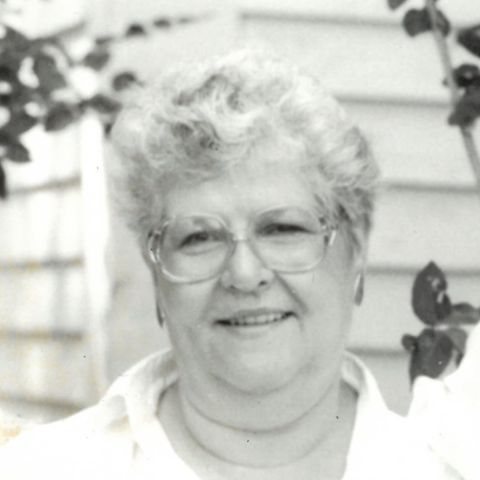
Marion Kuklewicz (1932-2017) of Turners Falls, MA
interview by David Nixon 3-16-1994;
Tape 10.2 of 16–side2—
Edited by Pam Hodgkins 6-18-2025; Lynne Manring & Jeanne Sojka 8/8/2025
David: Now, in addition to Michael, there were three other boys.
Marion: There were three other boys. The next one was George.
Just a little about Michael. Michael was the oldest boy. He used to, when he was young, when they were on the farm, when he was young, he used to do a lot of trapping.
David: Trapping.
Marion: Mr. Trapping. Mr. Trapping. Apparently, this was something that probably came over as a piece of heritage. I’m sure that was something that my grandfather and his parents did in Ukraine. They probably were, they lived near the Carpathian Mountains, so they would have been in the area where there were a lot of wild animals, for the furs. Again, just a fleshing thing, referring to their furs. And because of the extreme cold in the wintertime, it was necessary to have animal skins to put into clothing.
So I’m sure that was part of the heritage. And also fishing, not only for sport, but perhaps for food. So it seemed like that was in the genes.
And my oldest uncle, Mike, was quite a successful trapper. And he used to trap fox, muskrat, skunk, bobcat, and deer hunt when it was the season. And he used to dry and cure the pelts, and he would sell them to furriers.
And that was another way for them to make some money in the winter months when crops weren’t available. He could do the trapping, and there was no laws against it at that point. And there were an abundance of animals.
And right there in front of the mountain, Kellogg Mountain, which is in fact the house where we used to live, there were all sorts of wild game there. And so I’m sure that any of the animals whose meat was edible were used as food. And then the skins were then dried and sold for making into fur coats or whatever.
Another thing, he used to trap skunk. And when you trap a skunk, there’s some fat on the skunk that has been taken from them in those days and melted down and used for skunk oil, you know, the medicine used for skunk oil. Well, my grandmother had passed down the secret of skunk oil to my mother.
And let me tell you, if you were sick and you had a sore throat, you didn’t have to admit it very readily, because out came the bottle of skunk oil. And it got rubbed on your neck and then wrapped with flannel, a piece of flannel or a scarf. And you didn’t have a sore throat for very long because the skunk oil took care of that.
It would be hot like the liniment on your neck. And it would certainly open up all those sinuses and so forth. And you got better.
If you didn’t really get better, you told everybody you got better because you didn’t need another treatment of skunk oil, believe me. And then you only hoped that it was on a weekend that you didn’t have to go to school, so nobody would smell you. You know, so those were one of the home remedies that you used to get quite frequently.
Sure was worse. Sure was worse than the disease, believe me. So I’m sort of glad for modern medicine.
But anyways, he did do a lot of trapping. He also did a lot of fishing and hunting. And then, as an adult, when he didn’t do the trapping, the interesting thing was he then went to work for the Massachusetts State Fish Hatchery and was one of the chief caretakers of the fish hatchery in Sunderland.
And he did that until he died. He worked for the fish farm. And he had to do the salmon.
This is Michael. This is Michael. And then George was the second one.
And although he used to help his brother with the trapping, and he also was quite an avid fisherman, he was the one who loved to cook. And he became a baker and a cook and worked in several places. But the one place that I remember him cooking was he cooked at Amherst, well, University of Massachusetts.
That’s generally where it was called before it was a university.
David: It was the Mass. Aggie, wasn’t it?
Marion: I think so. Mass. Aggie Agricultural College. Yes. And then it later became the University of Massachusetts. So he cooked there until he retired.
And in the summers, when there weren’t students at the school like there are now, he used to cook at a lot of boys’ camps up in New Hampshire or Vermont. He did that. And, again, his leisure time was spent probably fishing and things like that.
So he was the third child. And then there was another boy, and his name was Andrew. And Andrew was probably the most like my grandfather in a lot of ways.
He was definitely not cut out to be a farmer. He was the one in his family who was a musician, played the drums, played the violin, several other musical instruments. He also had a good singing voice.
And when he married, he went to work in Chicopee, Mass., for a factory called the Bosch factory. And I don’t know what they made early on, but during my years as a child, we worked for American Bosch, which made government things for the war.
David: Don’t they make spark plugs?
Marion: I think they do now. Yeah. I don’t know what they made then, but whatever it was, it was for the war effort that we worked. And he worked there until he retired.
One of the things, yeah, do spark plugs have copper in them?
David: Yes.
Marion: I think so. Because he retired and he had very poor health due to the copper grinding that they had. But that’s what he worked. And he didn’t live to be very old. He certainly didn’t live to be 60.
He died here when I was a teenager. A lot of the men who worked here, because of the conditions weren’t certainly as good as they are now, probably didn’t have a lot of protective devices and so forth. He ended up with lung problems and problems from the copper grinding.
But that’s what he worked with at Bosch. He was more like my grandfather, who would be more of a gentleman rather than the rugged outdoors type of person. He was very interested in music and this type of thing.
And then there was a girl. Her name was Anna. That’s my half-sister.
And she, of course, was at home. And then when she got old enough to go out to work, she worked as a domestic at Eaglebrook School in Deerfield. She worked there til she was probably about 16 or 17.
And again, she may have started working when she was like 13, because they did work earlier than she was. And then when she was about 16 or 17, she moved to New York and found work as a domestic at one of the homes for a wealthy family in New York. Met her husband there.
He worked in New York for over 50 years. And then there was a younger boy. His name was John.
And John worked on a farm with his father. Again, he enjoyed the hunting and fishing. He was just sort of drawn to that by his older brothers.
And when he got older, because my two older brothers at that point had left home and gone to work on a big dairy farm in Pennsylvania, he decided that he would like to do a little exploring. And so he left with them and then went to work on a farm that had to do with a dairy farm. In fact, when my two older brothers worked on a big farm in Pennsylvania called the Antietam Farms, and worked there with my brother-in-law’s family, and that my oldest brother, George, went to work on a different farm in Pennsylvania because he was not able to go in the service because of the injuries that he had.
But he worked at both sides. His efforts for the war, the First World War, was to work on the Antietam Farms. And my brother Andy stayed and worked on the Antietam Farms until he decided to head back home and find his father’s farm.
Eventually, my mother’s uncle, John, he did get married. I forgot about that. He did get married and he married a girl named Nancy.
And they came back and he worked at just sort of odd jobs in Pennsylvania. So he was killed in a fire. There was a flash fire in his house.
It happened at night time. He tried to get out of the burned house. In the wintertime, there had been a big storm.
The door was closed and frozen shut. He wasn’t able to get out of the house.
My brother was just as famous as my uncle Mike. My uncle Mike, as I told you, was quite the fisherman and a hunter and actually died of sickness in the country. He was a Vermonter. He shared a camp up there with his people and he’d go out hunting.
He hunted all day long and came home, hung up his gun and his jacket and dropped dead. So he really lived his life to the fullest as a total outdoors person, which was rather unique. It was amazing that he managed to get back home.
David: Were any of these uncles……[unintelligible]?
Marion: That was my uncle Hank. He was the one that worked at the Bosch. He was married to a woman who was French.
She was not the most desirable. This happened to be his second marriage. He was married to a girl from Sunderland originally.
She was pregnant with their first child and was killed in an automobile accident. Then he met this other woman who was quite a looker. But she had quite a history. I don’t want to record and tape all the things she was, but she certainly wasn’t a prize.
David: You said that Alex and three of his sons were living together in a bachelor apartment.
Marion: It was my grandfather, my uncle Alex, my uncle Mike, my uncle George and my
uncle John until he left and Andy had lived. Andy was the one that was married. He lived in Chicopee.
David: Your grandmother, Anna, had seven children, one of whom died on the ship. Before your mother was married to your father, what kind of work did she do?
Marion: She was at home. My mother never worked at anything other than being the daughter of a farm family and taking over the responsibilities of raising children around the home when my grandmother was either ill or bearing children.
So my mother did that type of work. Then all of her life that she was married to my father, she was a mother bearing children, working on the farm, but she never worked a day outside of those types of things. She was definitely a housewife. Housewife, mother, farm helper, but she never had a job.
David: Did her mother, Anna, did she work?
Marion: I can only guess at the fact that she probably did domestic work. I can’t recall the mother saying anything different.
The women that did work out either worked as domestic helpers and probably in someone’s home or else they worked seasonal work on the farm. I don’t remember her ever being spoken about as working on the farm. I think she was pretty much a housewife.
She was a very short, very heavyset lady and died, well actually she died right after my mother’s job was gone. She was a very old woman. She died and she died of complications of the lungs.
So I would assume that she might have had some problems with her lungs. It’s probably why I don’t ever remember anybody talking about her doing anything but being a housewife. And Grandma was a very religious lady.
That was how my grandmother and grandfather probably were so involved with the building of the church in South Deerfield. She worked six days a week but on the seventh day she did not work.
David: And this was church?
Marion: Yeah, my mother’s church and stuff.
No, no, nothing in the Holy Ghost [Ukrainian] Church. They were very instrumental, one of the families that were very instrumental in having a church built in this area. And I can remember my mother saying that six days a week my grandmother worked.
She did the housework, she did the cooking, she did the baking and so forth. But on Sundays she would not do anything for food. For Sunday we’d always cook on Saturday and the most that she would do is warm it up on the stove but she would not do anything.
And my grandfather was always of the opinion that the seventh day was the Lord’s Day and he did not work. We couldn’t even as much as take out the flat iron and iron a dress or blouse. That would have been considered a sin.
That was considered work and you weren’t allowed to do work. If you lived on a farm you had to take care of the animals. That was a necessity.
That was basic, just like eating and sleeping and so forth. You had to take care of the animals. But once those basic chores were done, the rest of the day was devoted to church, to prayer, and to just relaxation.
And that’s why my father was always called a gentleman farmer because my father believed that if you had work to do that you weren’t out doing something wrong. You weren’t out raising cane or drinking to obsess or anything like that, that the Lord would forgive you for working on his day. If you were working to take care of the animals that were there at your farm work that needed to be done, working to earn money to provide for your family, which was, in his book, that was the man’s responsibility.
And if you had a big family, which we did, then you didn’t have it very easy. You know, you created this family and then you had to work to support it. He would, at times, go to church, but he was not always a staunch church member.
Not that he didn’t believe in strategic stuff, but he knew what he did. And being in control, he saw that going on so fast that he couldn’t get away from it. Whereas my mother was of the other, and she would get her work done on Saturdays. The meals would be basically cooked, and then she would get us all dressed, and off to church we’d go, and the rest of the day, as much as was possible, was the day we of leisure.
There were times when we would go to church and we’d come back at 12 o’clock and go out and work, but that was mostly in the summertime, when we had time to do that. We all had to get up and do our chores, but then the rest of the day was the day we should be. And she would try very hard to get him to relax, but like I said, he would sleep for a couple of nights.
It was very difficult for him to sit either.
David: So what did you do? Did you want him to stay some days off?
Marion: Well, my uncle Andy, the one that lived in Chicopee, I can remember him one year bringing us dolls at Christmas time. They were the first dolls I ever remember being a store-bought.
We had dolls that my mother used to make out of a piece of rag, and stuff like that, used to know rag, and they were kind of like just sort of simple rag doll type things. But we never had a doll with hair and eyes that closed and so forth until he got them for us. And I remember my sister and I used to play with them.
We probably couldn’t have them play because the bags would get dirty or the dresses should get rumpled. And that was one of the things we played with. I also had, we had inherited a china tea set, a little tea set from one of my mother’s relatives.
She was my godmother. And so she gave us the tea set. We used to sit and play with the teacups and teapots, at tea parties with our dolls.
And the other thing that was a great pastime for us was we could not afford to have paper dolls, books cut out of paper dolls, like a lot of the children did. They didn’t have any more money than we did. So we used to take the Sears Roebuck catalog, or the J.C. Penney’s, or whatever catalog that the family had gotten through looking at.
They did a lot of shopping, catalog shopping. So we would take the catalog and we would cut out the pictures of the models, the models’ clothes. And we had a dollhouse that we made out of paper boxes.
And we would cut out the men and women and girls and boys. We had our doll families that we cut out of the newspaper, or out of the magazine. And then in the Sunday paper, they used to have, in the comics section, there was one section with Maggie and Jim, and they used to have cut-out paper dolls.
And we would cut those out. And sometimes they would be too intricate for us to cut because they were small, so we’d get our older sisters to cut them out. And sometimes we’d paste them onto a piece of cardboard so we’d have a little bit more sturdy doll.
And those were what we played with in this paper box dollhouse. And we had mothers and fathers and kids and aunts and uncles, and depending on how well we prepared our paper dolls, we had quite a family. And then as I got a little bit older and my godmother’s children grew up, she gave me a set of china, furniture, doll furniture.
Well, it was actually a gold shadow box of doll furniture. And then we would play with real glass furniture, and that would only come out on Sundays, Sunday afternoons. And we would play, we’d bend the doll so it could sit on the little chairs, and that was how we used our stuff.
The other thing is sometimes we’d go visiting as a family. On occasion, my mother had some friends that are godparents to one of my older brothers that lived in Ashfield. And on occasion, in the wintertime, my father would have a horse and sled, not a sleigh, but a big, green sled, and we would take a ride out on a Sunday and go and visit them. And we would take most of the early afternoon.
David: How did you get across the Connecticut River?
Marion: There was a bridge. There was a bridge from my earliest recollection, there was a bridge. And back, let’s see, there was a big flood in 1936, I believe it was. The bridge that’s there now wasn’t built at that point in time. There was another bridge which was a little further north, about a mile north on the road for the old Sunderland grammar schoolers.
There used to be a bridge there, and during the big flood in 1936, I believe it was, that bridge washed away. So what happened is the only way to get across the river was by boat. And my Uncle Mike that I’ve spoken about used to have a boat, and he would row people across the river in his boat. So that was how people got from one side to the other.
David: Do you know where that boat was? Where did they cross it?
Marion: It was right where the old bridge abutments were. Just as you come over, I’m trying to picture it on the fly, but you’re familiar with the center of Sunderland?
David: Yes.
Marion: Where the lights are. If you come up Route 116 from Amherst and you turn right, there’s a little store and then there’s a street that goes down. Well, at the end of that little street, it’s a dead end street, at the end of that street is where the old bridge was. I don’t know if it’s called Bridge Street or not.
David: I think it is.
Marion: I think it might be. The library is on the corner. The store is there, and I don’t even know the name of the store now, but the little store is there. There was the library, then there was a big white house.
I’m thinking about when I was a little girl, and there was a big white house. Then there was the Sunderland Grammar School, and there were two or three other houses on the right-hand side. There were a couple on the left.
At the end of that little short street is where the bridge went across. It wasn’t very far from where the bridge is now. In fact, I’m not sure if the old abutments are still there.
It’s been a long time since I was down that road. I can’t recall, but it was right at the end of that street where the bridge went across and came over and broke on the other side, which is what we call the Pinewood plain. It wasn’t very far.
It was before that little island on the river. So that would have been the area in there, and I would assume that his boat, he must have kept on the river there to just ferry people back and forth. I don’t remember seeing a barge or anything.
I think it was just a boat. And there are, I don’t have any, but I know some people can pick that up. If they had a canoe available, they might have had the boat.
And I’m sure up and down the river, people were able to cross with whatever they had that would float. He used to do it kind of as a public service because, again, one of the things he enjoyed doing, he was on the river a lot fishing. They used to fish.
The river is fairly polluted now, although they’re working very hard to clean it up. In the early 1900s and 1930s, the fish that came out of the river was really very edible. They used to fish for shad.
They also fished certain times of the year for salmon. They used to fish for pike, sturgeon, and some people used to fish and catch eels, and they would eat the eels and eat the fish. Some people did. I don’t remember having that fish in the river.
David: The Portuguese were fishermen.
Marion: I don’t know. I’m thinking I’ll have to ask my Portuguese friend about it. I don’t know.
David: I think there’s a special festival that has a tradition. Were there Portuguese people?
Marion: No? Not that I know of. Not that I know of. There is a big Portuguese settlement in Ludlow, Ludlow, Mass. There’s a very large Portuguese settlement. Even today, there are a lot of Portuguese in that area. There’s a Portuguese society in Ludlow.
I think there’s a Portuguese society there. There were a lot of Portuguese in Fall River, Boston. Worcester.
Not Worcester. Yeah, Worcester, too, but Rhode Island, because I believe the Portuguese are fisher people, a lot of them are fisher people, and I think depending on where they came from, a lot of them settled right near major seaports. So I know that some Portuguese did.
I know a lot of the people of our nationality used to eat shad and sturgeon. I don’t even know if that fishery is still there now. I’m sure it probably does.
But those were some of the fish that we had. And a lot of times, they would spend the fish, you know, scale it, stuff it, and they used to bake it, serve a couple of fish and put it up on the table, and then they would eat it, which made a lot of the fish eyes look at me. We used to eat a lot of trout.
I used to eat a lot of trout when I was young. My father especially liked trout. My grandfather did.
The brooks that run off the mountains were a lot of freshwater streams, and that had a lot of natural fish in it. What I say natural is they were the wild fish that grew. And then in later years, they used the sockeye.
So when I was a child, that was another thing we did as kids. I do remember going fishing with my aunt’s brother. He’s three years older than I. And we used to go fishing.
We didn’t use that fish poles. We’d cut a nice, supple green stick. Sometimes a cherry wood be wild or another very flexible type of stick, and you’d have a piece of string with either a hook, or if we didn’t have a hook, we used a safety pin.
And we’d go and dig worms, and we’d use those for bait, and we’d fish in the brook. And the brook wasn’t deep enough that we had to do two hooks, or we didn’t think that one would get wet. But it really wasn’t a big, rushing river, having a brook that you had to worry about.
We used to fish and catch wild brown brook trout, and then we’d catch the brook trout. And this would be at the base of sort of the base of the mountain, and that’s the property, you know. As a matter of fact, one of our fishing poles was one of these fancy type of sticks in a piece of pasture, and it was right there.
All you have to do is throw a hook out of the window, and you can go fishing. But that was one of the things we did. Another thing that we enjoyed doing in the spring, we always used to go in the woods and pick wildflowers.
And we used to have, in the woods, it was quite moss-covered. There were a lot of pine trees there, and some places it was moist, and we used to pick wild May flowers, early spring. That was one of the early spring flowers.
And quite a few other spring flowers, violets, we’d always bring home a nice big bunch of violets to my mother. And there was an abundance of jack-in-the-pulpit that grew wild. There was another little white flower that I’m not sure if I recall the name. I think it was called catapole [? Yarrow or clover?]. or something like that. I’m not too fond of wildflowers these days. But we used to pick that.
And then, of course, the treasure of all treasures was lady slippers. And we used to have the pink ones and the yellow ones that grew right there, just on our property, because it’s woods property. There were a lot of pines, and they love to grow where there’s pine, pine shade and a lot of pine needles for mulch.
And you never know, it’s going to change. I have a picture of lady slippers up above me on the wall. It’s a theorem painting that one of my friends did.
That was, again, a little trip down nostalgia lane, where you can pick lady slippers, where you can pick lady slippers. And that was a prize. Then as the years went on, they became endangered.
So both the mayflowers and the lady slippers weren’t supposed to be picked, so that they could reseed themselves. But when I was a little girl, I used to be allowed to pick them. The other thing was when it was in bloom, again in the spring, was mountain laurel.
Our mountain was just covered with mountain laurel, and it would be sometimes very festive to go pick a bunch of that. And again, we’re not really supposed to be picking that now either.
David: What did you do with the flowers?
Marion: We’d bring them home for my mother. I mean, she didn’t, obviously, like today, we didn’t go to the florist and buy her a bunch of flowers. She didn’t have the money. We all worked, but we didn’t get paid, so we didn’t have spending money.
So we’d come home with a handful of flowers to decorate the house with and to present to my mother, and that was a special treat for her. And it was our way of showing how much we loved her, and appreciated all the things.
David: So she must have really enjoyed it.
Marion: She did. She really enjoyed it. And like I said, she was a woman who had always worked just in the home, and so anything that we did, even if we went out and found a pretty stone, or it was not unusual for us to go and gather a pretty eggshell that might have fallen out of the nest after the bird hatched, and we might bring home a piece of eggshell and present it to her.
We thought we were doing such a great thing. Or a pretty feather, or anything like that, that we thought was a real treasure, and we’d bring it home and present it to her. My father probably would have not given us the time of day because he was too busy, but she would always take the time to marvel at what we found out there, little things of nature that we found.
If we found a little bird that got pushed out of the nest that wasn’t able to fly or something, we’d bring it home, we’d get a little box and a blanket, we’d try to feed it and nurse it, and again, our nurturing would allow us to do that, or our other little wild animals. Sometimes we’d have rabbits or babies for us that we’d try to feed in those nests at home. Those were the very simple things like that.
I mean, we made our own fun, where we didn’t have TV and things that you entertain. I’ll have to tell you another thing that we used to do. In the wintertime, when I was a little girl growing up, Saturday nights, very often, people in the neighborhood would get together, and they would usually end up coming to our house because it seemed like we had the biggest family, so you couldn’t just pick up the kids and go to visit.
It was just overwhelming to have all these kids. So very often, neighbors would get together. Sometimes they’d bring their children, and we would amuse ourselves listening to MIDI [?] records.
It might be one thing that we would listen to. And the adults would get together and sit around the kitchen table. We used to have a big kitchen in our little house, which we lived in, and we had this humongous kitchen table, which seated about 15 people, 12 to 15 people.
And they would gather around the table, and we would play cards. One of the favorite games was pinocle, which I never loved to play, but we thought I loved it. My father used to like that, and they didn’t play like people play now for money or anything.
It was just a way of relaxation. And they would play the pinocle. We would probably make popcorn on the wood stove and serve big bowls of popcorn.
My father had a small orchard, and so we had fresh apples that we used to keep downstairs. And the other thing that my mother did is when she’d be putting up the barrel of sauerkraut, she’d take the green apples that you get in the fall, and she would put them in the brine with the sauerkraut where they’d be pickled in the sour, and those were real good. So all the neighbors used to come to our house and have apples.
So that would be our job, my sisters and I. We’d go down cellar, open up the barrel of sauerkraut, fish around the barrel, and bring up a bowl of apples. And we’d have apples and popcorn and things like that. Or sometimes my mother would make donuts.
We’d help her fry the donuts with sugar, then we’d pass them around to the next group. So it was just sort of making do with what you had. And people spent a lot more time visiting, just generally visiting, than I think we do now.
I think our lives have gotten so busy. We sometimes don’t take time out to just sit and have a leisurely evening of visiting. Now I think we sort of think about going out to dinner or going to the theater or something like that.
But we had to really entertain ourselves, and that was one of the ways of doing it. And then if the women came, they didn’t enjoy playing cards. You know, maybe they’d sit around in the living room with my mother, and we used to have both a big kitchen and a big dining room.
Or maybe in the dining room they might sit around and swap recipes or stories or just sit and kind of catch up on who had the newest baby and what was happening when he was older. So those were things we did. Again, one of my mother’s real loves was flowers.
And this was something I remember. She always had flowers in the house, plants, green plants. But she loved flowers, so she always had those.
And I don’t remember too much of when I was really, really young. But when I got older, we lived in a house that my father had bought, one of the adjoining farms. And I think I told you last time, the porch on it was really decrepit, so they tore it off.
And then we had a sun porch built. And I think that’s probably why I always wanted one on my house, although mine was on the wrong side of the house. But it was a south-facing sun porch.
And at that time, my mother had gotten older. We had grown up and we were no longer, you know, she wasn’t responsible for caring for us as much. We were older.
We were in high school. And then the older ones were working. So she had a little bit more time to devote to things she liked.
She had gotten a couple of African violets. They were quite popular then. She had gotten a couple of African violets, I think maybe it was Mother’s Day gifts or something like that.
And if a leaf would get a little sickly or break off, she’d put it in a little pot of dirt or water and get it rooted. And the next thing I knew, she had 200 African violets on her porch. She also had a collection of, she called them orchid cactuses.
They were these great big leafy things that my father used to get mad at. And they just took up so much room. And they weren’t the prettiest things to look at.
And I remember once he got really angry. And he said to her, “You’ve got to get rid of all those junky old flowers. They don’t blossom. They just take up space and they take up all your time.” And so she said, “Okay, I’ll get rid of them.” But she didn’t throw them away.
She took them upstairs and she put them in the attic. Because she just couldn’t bear to throw them out. Well, the attic in the wintertime used to get quite warm by the chimney,
because we had wood heat, so it would get quite warm in the attic by the chimney. So she had sort of snuggled them in on a couple of tables there. He never went up in the attic, so he didn’t know.
And we’d go up there and we’d water them once a week or maybe every 10 days or whatever. And the next thing we knew, they started to rot. They didn’t blossom very often.
I think only blossomed about every seven years. But this winter, they started blooming, so she finally brought one out. She showed it to him.
He saw the blossoms. He was quite pleased that she hadn’t thrown them out. So then she was allowed to keep them.
And she had one table at the end of the porch. And that was all covered with a cactus, which were then blooming. And she always had Christmas cactus that bloomed.
And she had one that somewhere in her house, I have a picture of it. We’ll have to go and get you some old boxes of pictures. But it was huge.
And she used to keep it on that little table that I had at the end of my couch. And it would just hung way over. It was a magnificent plant.
And it had one year, it had over 500 blossoms. It was just beautiful. That was just fine.
And she’d have geraniums and things like that. She just loved gardening. And we used to laugh at her because you could go to the stores by then and buy potting soil, but not my mother.
She had to make her own potting soil. So I can remember going to school one day, coming home, and I came in the kitchen and I said, “Oh, my God, what smells in here? “ My mother said, “Well, I’m working on some soil.” I said, “You’re working on some soil?” We didn’t see any pots of soil around.
Well, it was in the springtime, and my mother had taken a walk up into the woods, and she found an old tree stump that was all rotted. And she dug out the insides of that because those old rotten wood chips were really good fertilizer for her African violets and plants. And then she got some sandy soil and mixed with that.
Then she went out behind the dairy barn where you had the piles of manure. She had dug down and gotten some of the liquid fertilizer from there, brought it home, put some other, heavier soil, mixed it all together. And she had this combination of them, and she was baking it until she’d get rid of the germs. Well, I’ll tell you, it was pretty pungent in the kitchen.
Well, when my father came home, he was not too happy about that. That meant then we had to clean the stove. So they decided to take an old little wood-burning stove, and they hooked it up outside for her so she could then take care of her potting soil outside.
And that was kind of funny. I remember that. I’ll tell you, that was funny.
So we’d always say, “Mom, what are you cooking for dinner tonight? You’re making us a pot of soil.” But it was just kind of just, you know, it’s funny how these things stick in your head and you think about some of the silliest things. But she did have the most beautiful flowers.
I have some flowers. They’re just phenomenal. And she would have, she had like tables and tables of them.
She had a bookcase that my sister had, and it looked like my desk except that it was open shelves. And she used to have the violets on there, and her prized ones would always go on there. And it was a golden oak piece like this.
And that used to be, those were her treasured ones. And then the ones that weren’t quite so, the ones that weren’t quite so elaborate, you know, got designated to just table space. And it was just, it was just incredible.
So that’s what she did in the past. Then I told you she only went into third grade. But my mother could read and write.
And when we got older, she decided, this was after my father died, I believe, she decided that, oh, back at that time, people used to come around and tell me the World Encyclopedia. So she decided to buy it. And I can remember her sending out her monthly payments.
She probably paid five or six dollars a month so we could have the encyclopedia. And by then, I think there were just, there were just three or four of us that were still left in school. And we would get just marvel at the times that we would come home, and my mother could be sitting in a chair with the World Book, and she could be reading it.
So she was really, you know, she was interested in learning. And she was a woman who was probably in her early fifties, you know, and she was reading the encyclopedia, trying to gain as much knowledge as she could, which was really, I thought, rather interesting. But she did value education, even though she hadn’t had a chance to have the opportunity to do that.
David: Well, she sent all your children off.
Marion: We all went off to school. Well, my oldest brother graduated from grammar school, and then he did not graduate from high school.
He graduated at least from the eighth grade. My brother, John, graduated from high school. In fact, he was on the debating team in Amherst, and he was a good student.
The next one that came along was my brother, Andy, and unfortunately, he became very ill. He was playing football in school, and he got spiked with a spike and got blood poisoning from it. And that was back again before they had penicillin and all these wonder drugs to take care of those kind of things.
And so he got a massive infection with blood poisoning, and he was in the hospital on and off for almost five years and almost lost his life and had 24 operations to get rid of the infection which had settled into the marrow of his bones. And they did all these horrendous things, like they had to drill into the bones and insert gauze with them and get out the infected material, and this is really awful. But they couldn’t get rid of it, so the only way that they knew how to do it, this was real old-fashioned medicine, is they insert a maggot into the bone to eat away, like they did in the wars, to eat away all this necrotic tissue and so forth.
And then they had to put ether on to kill the maggots and cleanse the wounds that way. It was a miracle that he actually survived the whole ordeal. But as I said, he was in and out of the hospital pretty much at the time for five years.
So unfortunately, he didn’t get a chance to finish school. However, Andy was quite talented in drawing, mechanical drawing and design, and they did offer him an opportunity to go to Massachusetts Agricultural College to take up drafting, and he didn’t. He didn’t decide to do that.
He decided that as soon as he was able to, he should work out on the farm and help out because he had all these years when he was not able to work. Also, Andy had diphtheria as a baby, and consequently with all the illnesses he had, his eyesight was very poor, and he decided that he just didn’t know that he’d make it through. And they had gone through quite a lot of detail to get him allowed to go to college because he had never finished high school.
He was, you know, really quite versed in the field. He used to have a lot of drawings that he did when he was at home for farm type of buildings and so forth that he could draw up himself. So he would be the one who planned if we needed to put an addition on to the farm or something, he would do all the planning and sort of sketch it out, you know, on paper and then something else.
He would actually do the heavy buildings if he wasn’t able to do that. And he maintained that builder’s knowledge all through his adult life. And he did, when he worked at other jobs, after he didn’t have the farming job, he also did some design work, you know, for farm buildings and things like that.
So he probably had the potential to be quite an architect, and he just didn’t, you know, he didn’t materialize. He does have two sons, they have each a major degree or something like that. So one graduated from university, the other one was in the Navy, and both came in the Navy and all worked out in California in government work out there, you know, field of engineering.
He’s been doing some chemical engineering out there.
[End of Tape]