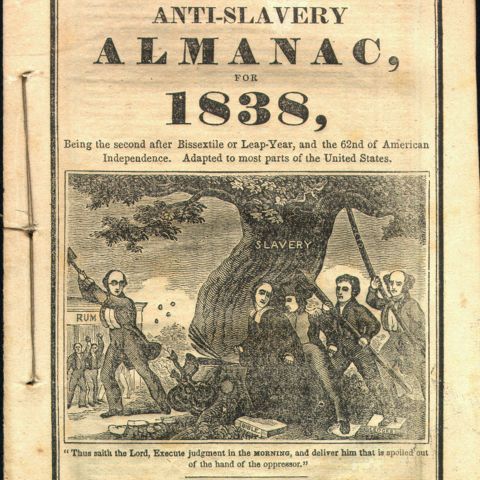
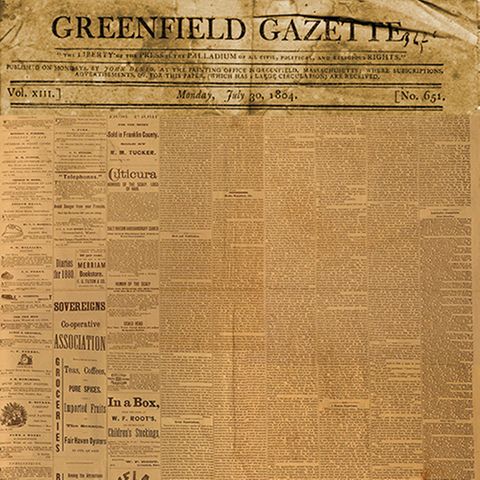
In 1792, the Greenfield Gazette newspaper in Greenfield, Massachusetts, printed a letter Thomas Jefferson (1743-1825) had written the previous year to Benjamin Banneker (1731-1806), a free-born African American man from Maryland. Jefferson was the United States Secretary of State when he replied to Banneker thanking him for the gift of an almanac Banneker had authored and published. Almanacs were among the most commonly owned books in America, second only to the Bible. Almanac makers used astronomical and other mathematical calculations to provide weather predictions, recommended planting times, tide tables, and other agricultural information essential to farmers and mariners.
A self-taught, mechanically gifted astronomer and surveyor as well as a farmer, Banneker was 60 years old when he decided to publish an almanac to demonstrate that African American people were intellectually equal to Whites. He sent Jefferson the almanac “in manuscript that you might also view it in my own hand writing” to prove it was his own work. Antislavery advocates eagerly printed copies of Jefferson’s courteous and positive response in the hope it would help the antislavery cause.