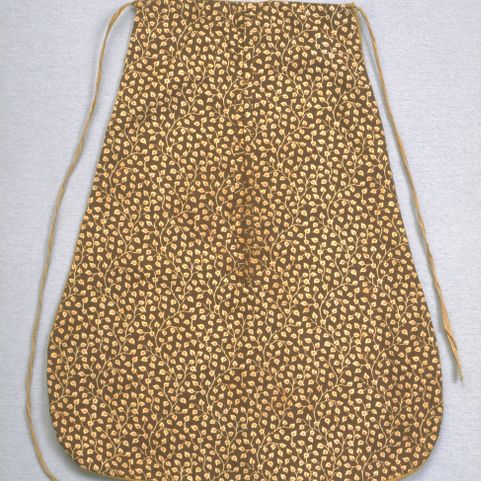
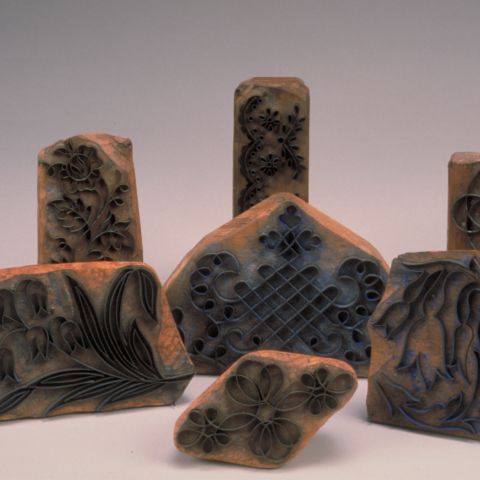
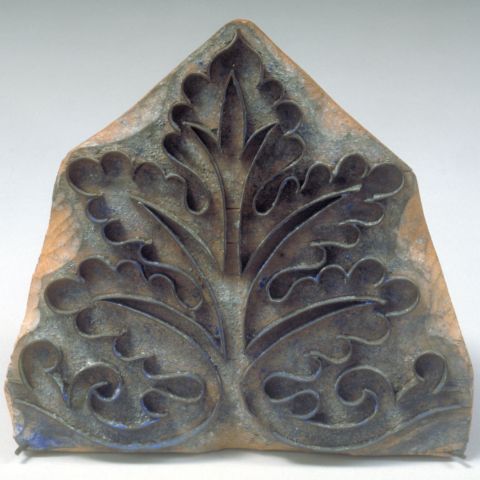
In the 18th and 19th centuries, calico referred to a cotton cloth that could be dyed or printed, with either a plain color or a design. The designs were larger than the smaller prints on calico as we know it today. Calicoes were first imported from India, then Great Britain. They were very popular in the American colonies, but Americans lost access to calicoes and other imported fabrics during the American Revolution. Some used wooden hand stamps like these to imitate the look and appearance of printed cotton on home-made linen fabric with ink made from local plants and berries.
These stamps came from the Hoyt family of Deerfield, Massachusetts. Epaphras Hoyt was a boy at the time, but later recalled how the stamps were used during the war, with limited success:
“When English calicos could be procured they were worn but after the commencement of the revolutionary war this article became scarce…During the greatest deprivations caused by the war substitutes were found for calicos in stamped linen. Sheets which had become thin from use, were submitted to the process…The colors used were various, but often no other than the juice of the elder berry, perhaps prepared by some mordant to render it more durable; but the colors were miserably defective at the best. Into the coloring matter the stamp was dipped, and then imprinted on the sheet, smoothly stretched for the process . The work was not very expensive. In this dress, we often saw our sprightly females proudly flaunting in their home made calico. But like the fathers of some of our brilliant summer birds, the colors soon faded and left the receiver with the sad remembrance of its precious beauty.”