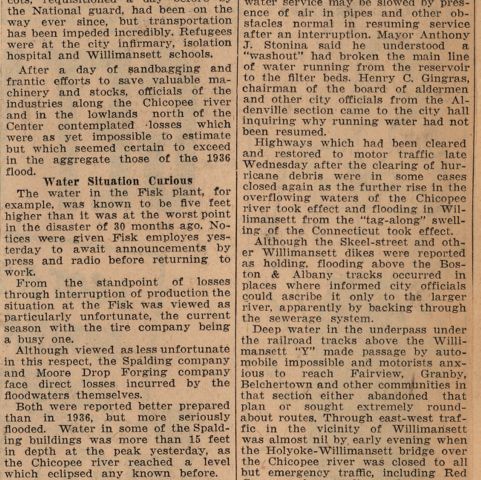
On September 21, 1938, New England and southern New York experienced one of the most powerful hurricanes ever recorded in the northeast. The hurricane did not have an official name like those today, but is often referred to as “The Long Island Express”, “The Yankee Clipper”, and “The ’38 Hurricane”. Striking with virtually no warning, it killed almost 700 people, injured thousands, and destroyed buildings, roads, cars, utility poles, and forests across the region. The Greenfield Recorder-Gazette was among Massachusetts newspapers that issued Hurricane: The Complete Historical Record of New England’s Stricken Area, September 21, 1938. In “More Than 700 Vivid Views” with captions, Hurricane documented the storm’s destructive impact on people and towns throughout Massachusetts, as well as Connecticut and Rhode Island.
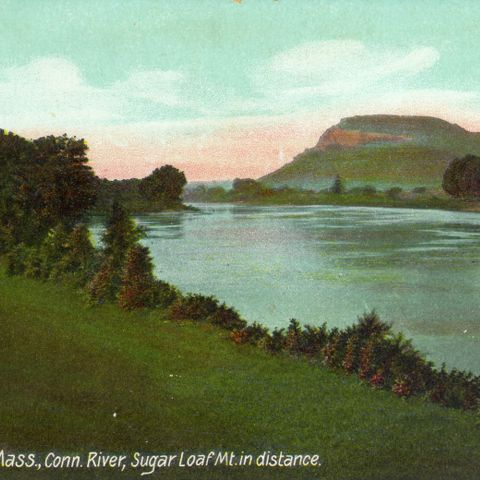
The southern New England coast suffered severe damage from winds as high as 120 miles per hour as the storm moved north at 60 miles per hour. Milton, a town just south of Boston, recorded gusts of 186 miles per hour before the anemometer measuring wind speeds broke. Disastrously, the powerful hurricane’s arrival coincided with astronomical high tide, causing a massive storm surge. Tides ranged from 14 to 25 feet. Downtown Providence, Rhode Island, was submerged under nearly 20 feet of water, and parts of Falmouth and New Bedford, Massachusetts, were under 8 feet of water. The storm traveled directly up the Connecticut River Valley, causing widespread flooding and destruction as the Connecticut and other rivers surged over their banks. In New England, 564 people died and over 1,700 were injured. More than 15,000 buildings were damaged, with 8,900 destroyed; almost 6,000 boats were either damaged or destroyed. Tall, stately trees in every town went down and many historic church steeples toppled. An estimated 275,000,000 trees were felled by this disastrous storm that destroyed 1,000 square miles of New England forest. The hurricane caused over $300,000,000 in damage, the equivalent of what would be billions of dollars today.