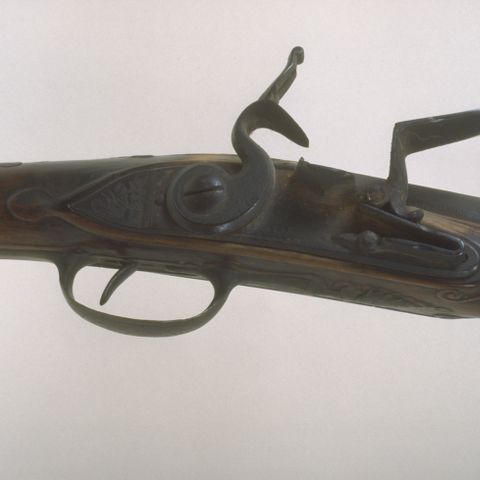
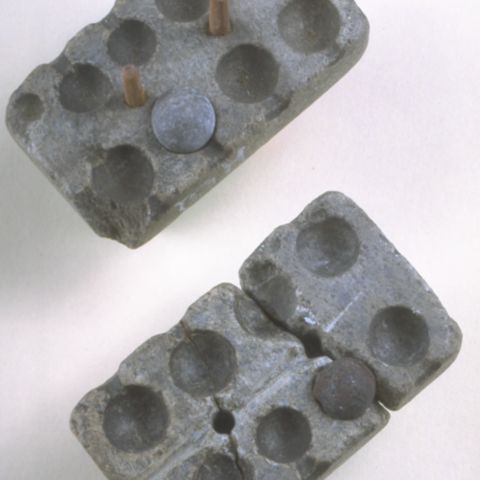
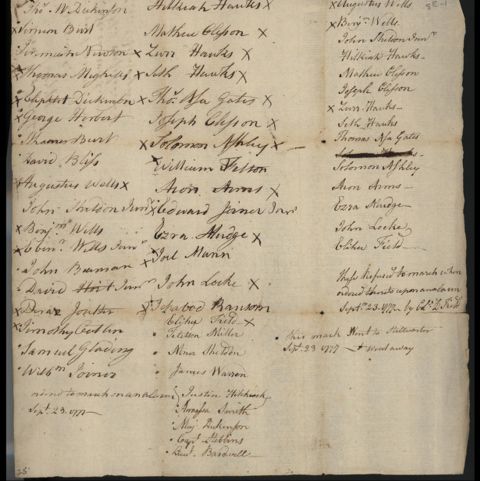
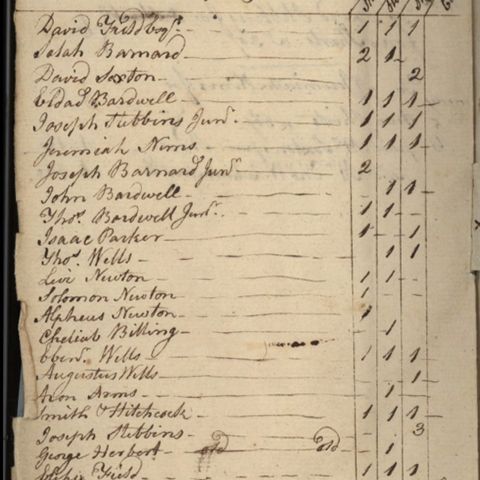
The year is partially torn away in the original document and the sender’s signature is also missing in this letter written from Boston, dated March 25. However, names in the letter (Colonel Israel Williams of Hatfield, Lieutenant Colonel Monro, and Colonel John Worthington of Springfield) reveal it is almost certainly related to the late 1750s during the French and Indian War (1754-1763). The militia being mobilized and supplied included 70 men from Hatfield, Massachusetts, and surrounding towns as well as men from Marlboro and Boston. They may have been among the reinforcements that marched to western New York where French and British forces with their Native allies continued to fight for control of the region and its strategic waterways.
The words “Articles of Capitulation granted to Col Monro” on a second page are in a different hand and refer to the surrender of Fort William Henry by Monro in August, 1757. Lieutenant Colonel George Monro of the 35th Regiment of Foot took command of the garrison of British Regulars and colonial militia at Fort William Henry in March, 1757. As it turned out, Monro’s garrison would be hopelessly outnumbered by a much larger French army that besieged the fort that summer led by General Louis-Joseph, Marquis de Montcalm. In addition to several thousand French Regulars and militia, Montcalm’s forces included about 2,000 Indigenous warriors from a number of Native tribes, among them Abenaki, Ottawa, Ojibwa (Chippewa), Potawatomi, Winnebago, Sauk and Fox, Iowa, Menominee, and Mohawk from Kahnewake.
With no hope of rescue or reinforcements, Monro was forced to surrender Fort William Henry. In a tragic turn of events, the safe passage General Montcalm guaranteed to the British soldiers, colonial militia, and camp followers who marched out of the fort unarmed under a flag of surrender did not take into account the agenda of the Native warriors. They attacked the column, looting possessions and stripping clothing from the evacuees, killed about two hundred people, and took hundreds captive. Colonel Munro survived the attack but died three months later.